Appetite Suppression Meets Anorexia: Exploring GLP-1 Drugs, Gaunt Appearances, and Eating Disorder Concerns
Glucagon-like peptide-1 (GLP-1) receptor agonists represent one of the most significant pharmacological advances in metabolic health in decades. Originally developed for type 2 diabetes, drugs like semaglutide and tirzepatide mimic the action of the natural GLP-1 hormone to enhance insulin secretion, suppress glucagon release, slow gastric emptying, and profoundly reduce appetite by acting on brain reward and satiety centers. Clinical trials show average weight losses of 15-22% of body weight over 72 weeks in many users, far exceeding outcomes from traditional diet and exercise. For individuals with obesity or diabetes, these medications lower cardiovascular risk, improve blood sugar control, and enhance quality of life.¹

We have all seen the dramatic weight loss of several showbiz personalities, some of whom look so thin that they may be ill. The term “Ozempic face” (or more broadly, “Ozempic body”) entered popular lexicon around 2023 to describe the cosmetic fallout of rapid fat loss. Users report hollowed cheeks, sunken eyes, prominent wrinkles, sagging jowls, and thinning lips—changes that can make even younger individuals appear prematurely aged or emaciated. UCLA Health experts explain that these effects stem not from any unique toxicity of the drug itself but from the speed and extent of subcutaneous fat depletion. Facial fat pads provide youthful volume; when they vanish quickly (as occurs in 60-70% of GLP-1 users who experience substantial weight reduction), the skin lacks time to retract, resulting in a gaunt, skeletal look reminiscent of severe caloric restriction. Similar changes occur with any rapid weight loss, whether from bariatric surgery, extreme dieting, or illness. Preventive strategies include slower dose titration, adequate protein intake to preserve muscle, hydration, collagen-supporting skincare, and, in severe cases, fillers or surgical lifts. Yet the visual resemblance to anorexia nervosa—sunken features, prominent bones—has fueled public concern and media headlines.²
It is crucial to differentiate pharmacological effects from the psychiatric disorder anorexia nervosa. Anorexia involves intense fear of weight gain, distorted body image, and deliberate restriction driven by psychological factors, often with genetic, environmental, and neurobiological underpinnings. GLP-1 medications induce appetite suppression through gut-brain signaling, not psychological compulsion. Users typically do not exhibit the hallmark body dysmorphia or terror of fatness central to anorexia; instead, they may feel relief from hunger cues. Nonetheless, the result—extreme thinness and a risk of malnutrition—can appear outwardly identical, raising legitimate questions about overlap.¹
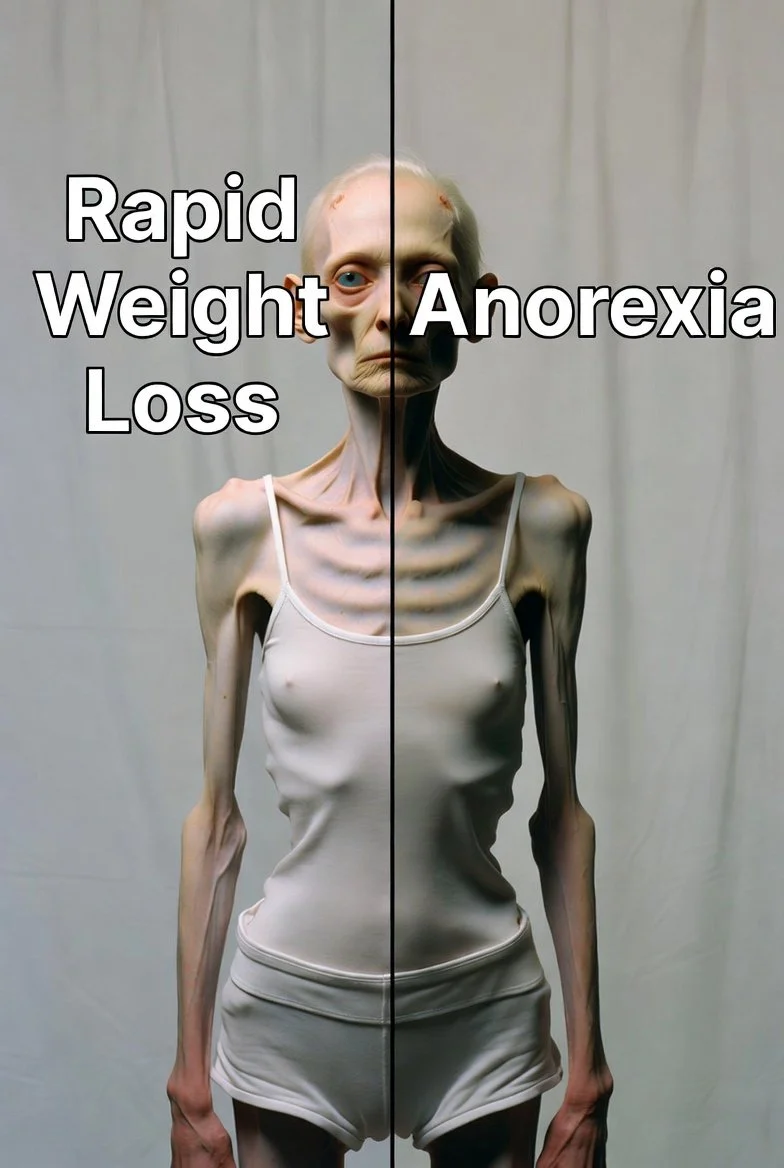
The association between GLP-1 drugs and eating disorders is more nuanced and concerning. Organizations like the National Eating Disorders Association (NEDA) and treatment centers such as The Emily Program highlight several risks. Appetite suppression and delayed gastric emptying can mask natural hunger signals, making it easier for those with restrictive tendencies to skip meals or undereat without physical discomfort—behaviors that mirror and potentially reinforce anorexia or atypical anorexia nervosa patterns. Rapid weight loss heightens the dangers of malnutrition, electrolyte imbalances, and refeeding syndrome, which is an electrolyte imbalance that may cause neurologic, pulmonary, cardiac, neuromuscular, and hematologic symptoms—many of which, if severe enough, may result in death, particularly in individuals with a history of eating disorders. For those in recovery, the drugs may disrupt intuitive eating practices essential to healing. Anecdotal reports and clinic data indicate rising cases of GLP-1 misuse among people with anorexia, bulimia, or binge eating disorder, sometimes obtained online without medical oversight. One investigation found multiple eating disorder clinics reporting patients with restrictive disorders who escalated doses or combined medications with purging.¹,³

Research remains limited but points to differential impacts across eating disorder subtypes. In binge eating disorder (BED) and bulimia nervosa, short-term studies (3-6 months) suggest GLP-1 agonists may reduce binge frequency by blunting hunger and reward-driven eating, with some case series showing promise as adjuncts. However, these benefits are preliminary, derived from small samples, and do not address underlying emotional triggers. For restrictive disorders like anorexia nervosa or atypical anorexia, the picture is bleak: appetite suppression can exacerbate control-oriented behaviors, worsen malnutrition, and complicate treatment. NEDA emphasizes that many eating disorders go undiagnosed, especially in larger-bodied individuals or people of color, making pre-prescription screening critical. A 2024 review by Bartel et al. in The International Journal of Eating Disorders underscores the need for caution, noting potential for misuse and unknown long-term psychiatric effects.⁴

Body image complications add another layer. Rapid transformation can lead to “phantom fat” distortion, in which individuals struggle to perceive their new, thinner bodies accurately. A 2025 study in Body Image found that interest in GLP-1 medications correlated with higher body shame, weight concerns, and disordered eating behaviors, though strong body appreciation appeared protective. Societally, these drugs amplify thin-ideal pressures, potentially normalizing extreme leanness and stigmatizing larger bodies further. Critics argue that marketing focused on aesthetics rather than health may drive non-medical use, particularly among vulnerable adolescents or those with subclinical disordered eating.⁵

Clinically, experts recommend thorough screening for eating disorder history or risk factors before initiating GLP-1 therapy. Collaboration between endocrinologists, primary care providers, and eating disorder specialists is ideal. Monitoring should include regular assessment of nutritional status, psychological well-being, and eating behaviors—not just weight and glucose. For patients with diabetes or obesity who also have controlled eating disorders, benefits may outweigh risks under close supervision; for others, non-pharmacologic approaches or alternative therapies might be preferable. Discontinuation requires care, as weight regain is common and can trigger distress or cycling.

In summary, GLP-1 inhibitors deliver powerful metabolic benefits but are not risk-free. The anorexic-like appearance many experience is a predictable consequence of rapid fat loss, not a direct psychiatric mimic of anorexia. Yet the drugs’ appetite-altering effects create a genuine association with eating disorder vulnerability—potentially triggering, exacerbating, or masking symptoms in susceptible individuals. As usage surges, healthcare systems must prioritize education, screening, and integrated care. Patients considering these medications deserve transparent discussions weighing cosmetic, nutritional, and psychological trade-offs against health gains. Ultimately, true progress in obesity treatment must address both bodies and minds, ensuring that the pursuit of health does not inadvertently fuel disordered eating. (Word count: 1,028)Footnotes and References
National Eating Disorders Association. GLP-1 Medications and Eating Disorders. Available at: https://www.nationaleatingdisorders.org/glp-and-eating-disorders/. Accessed May 2026. (Provides comprehensive overview of risks for restrictive eating disorders and clinical recommendations.)
UCLA Health. Ozempic Face (and Other GLP-1 Side Effects). Available at: https://www.uclahealth.org/news/article/ozempic-face-and-other-glp-1-side-effects. Published 2025. (Details cosmetic facial changes from rapid weight loss.)
The Emily Program. GLP-1 Medications and Eating Disorders: Risks & Recovery. Available at: https://emilyprogram.com/blog/glp-1-medications-eating-disorders-risks-recovery/. Published January 30, 2025. (Discusses differential risks by eating disorder subtype, including malnutrition in restrictive cases.)
Bartel S, McElroy SL, et al. Use of glucagon-like peptide-1 receptor agonists in eating disorder populations. The International Journal of Eating Disorders. 2024;57(2):286-293. (Cited in NEDA; reviews potential benefits and risks in ED populations.)
Markey CH, et al. Body image and interest in GLP-1 weight loss medications. Body Image. 2025. https://doi.org/10.1016/j.bodyim.2025.101041. (Examines psychological predictors of interest in these drugs.)