Rethinking the Role of Carbohydrates in Endurance Exercise
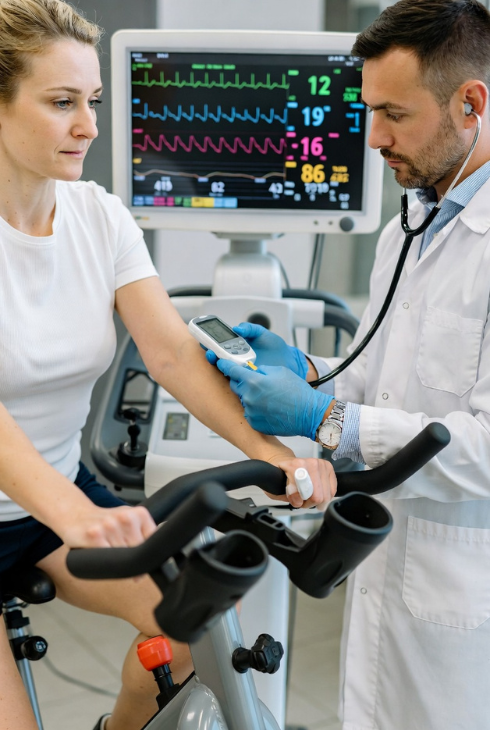
The traditional view in sports nutrition holds that carbohydrates are the primary fuel for athletes, especially during prolonged or intense exercise. We've all heard the mantra: load up on carbs to maximize muscle glycogen stores, ingest them during workouts to spare those reserves, and push through fatigue. But what if this focus on muscle glycogen is misplaced? A groundbreaking review by Noakes et al., published in Endocrine Reviews on January 21, 2026, dives into over 160 studies from the past century to argue that the real limiter isn't muscle glycogen depletion but rather exercise-induced hypoglycemia (EIH)—a fall in blood glucose that threatens brain function and triggers protective fatigue mechanisms.[^1]
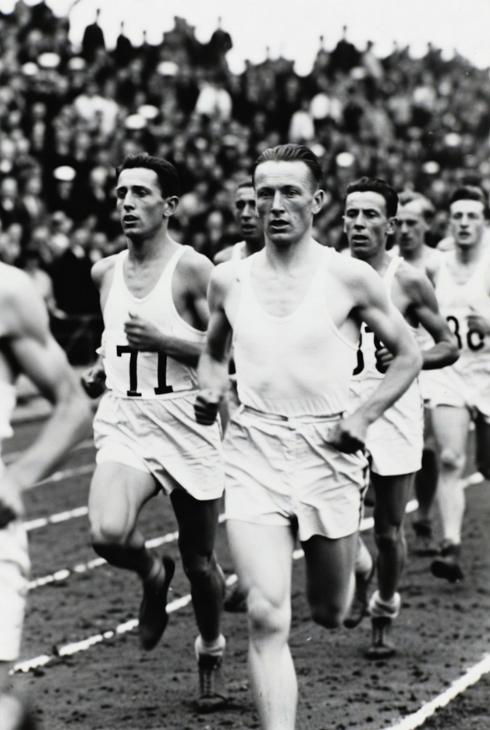
The story begins in the 1930s with Scandinavian researchers such as Boje, Christensen, and Hansen, who showed that ingesting carbohydrates during exercise reversed exhaustion by countering low blood glucose, acting through a central neural pathway to prevent "glycopenic brain damage." Their work suggested fatigue was a "hypoglycemic symptom of cerebral origin." Fast-forward to the 1960s, when muscle biopsy techniques shifted the spotlight. A seminal 1967 study linked higher pre-exercise muscle glycogen to longer endurance at 75% VO2max, concluding that glycogen depletion causes fatigue. Yet that study overlooked profound EIH at exhaustion, particularly among individuals following low-carbohydrate diets. Noakes et al. argue that this omission gave rise to a paradigm: muscle glycogen as an "obligatory" fuel, with fatigue as an "energy crisis" leading to ATP depletion and rigor—except rigor never occurs in exercising humans.

Reexamining the evidence, the review dismantles the "tricarboxylic acid cycle anaplerotic theory" (TAT), which posits that glycogen depletion triggers an unavoidable energy shortfall. Instead, fatigue is a brain-regulated safeguard against irreversible damage. ATP levels don't plummet at exhaustion; studies show that muscle ATP remains stable even during prolonged efforts. The 1967 data, when reanalyzed, reveal blood glucose as the consistent factor at fatigue across diets, varying just 20% despite 193% differences in endurance time. High-carbohydrate diets increased carbohydrate oxidation but offset the corresponding reductions in fat oxidation, suggesting no reliance on glycogen.

Pivotal 1980s studies by Coyle et al. proposed a new idea: carbs ingested during exercise provide "obligatory" exogenous fuel for glycogen-depleted muscles, not just EIH reversal. But Noakes et al. critique this as unproven. In those experiments, fatigue was associated with falling blood glucose, not with proven glycogen sparing. For instance, in one trial, seven of ten cyclists who fatigued early with a placebo due to EIH <3 mmol/L; three without EIH performed equally with or without carbohydrates. At exhaustion, metabolism was identical except for lower blood glucose in the placebo groups—fat often dominated the energy supply, contradicting the CHO's "obligatory" role.
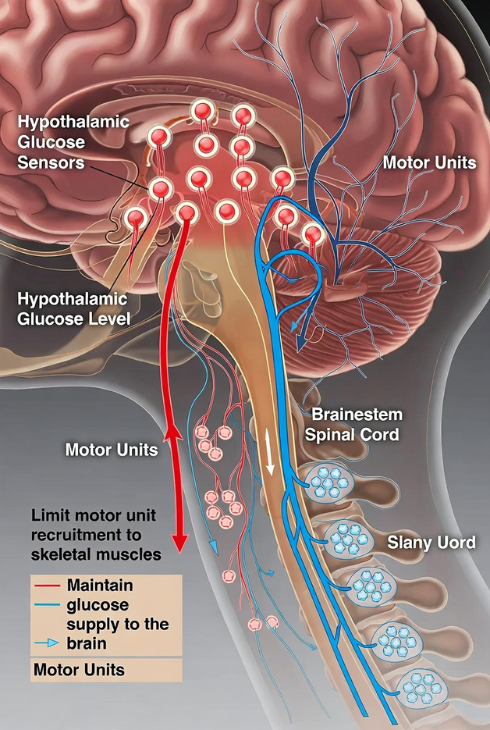
A meta-analysis of 217 studies reinforces this: in 88% of studies in which carbohydrates improved performance and blood glucose fell in controls, prevention of EIH was the key factor. Carbs boosted outcomes 2.7 times more when controls developed falling glucose. Neural pathways explain why: hypothalamic sensors detect glucose drops, limiting motor unit recruitment to curb skeletal muscle glucose uptake and avert brain glycopenia. Symptoms vary across individuals, often subperceptibly during strain, but relative declines from baseline impair performance.
Dose-response tests further challenge the replacement hypothesis. Increasing CHO intake hikes exogenous oxidation, but performance gains plateau at low doses (15-30 g/h). Studies show no serial improvements beyond minimal amounts, preventing EIH. Guidelines recommending 120 g/h ignore this; real-world ultraendurance athletes rarely exceed 60 g/h and often thrive on mixed fuels, with higher fat intake linked to better performance.
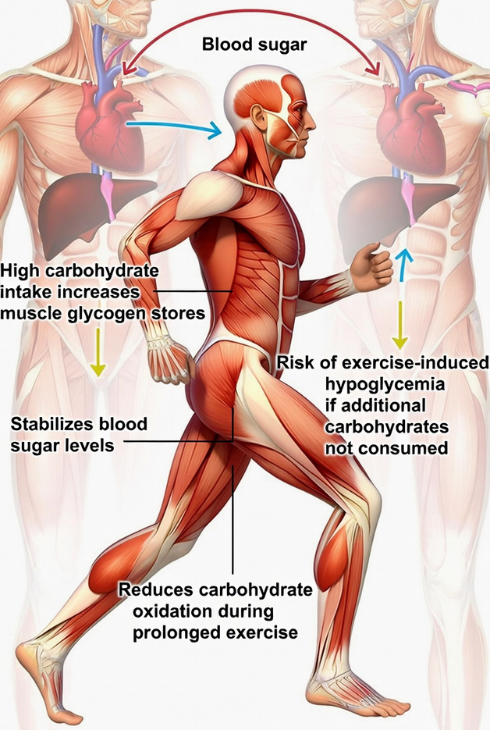
Interestingly, a high-carbohydrate (CHO) intake accelerates muscle glycogen breakdown by inhibiting fat oxidation through insulin spikes, rather than preserving it. However, liver glycogen is spared; increased carbohydrate intake reduces hepatic glucose output, thereby helping to stabilize blood glucose levels. During prolonged exercise, the overall oxidation of carbohydrates decreases while the oxidation of blood glucose increases. This shift can increase the risk of exercise-induced hypoglycemia (EIH) if no additional carbohydrates are consumed, particularly when the liver's gluconeogenesis (the process of producing glucose from non-carbohydrate sources) is low. In other words, while high carbohydrate intake can enhance muscle glycogen breakdown and stabilize blood sugar levels, it may reduce carbohydrate oxidation during prolonged exercise, increasing the risk of exercise-induced hypoglycemia if additional carbohydrates are not consumed.
Animal models bolster this: rats overexpressing liver glycogen-targeting proteins endure longer, resisting EIH despite unchanged muscle glycogen. Muscle glycogen synthase knockouts function normally, with hepatic stores over muscle stores.
Human adaptations to low-CHO diets yield peak fat oxidation (>1.5 g/min) even at >85% VO2max, refuting the "crossover point" at which fat supposedly yields to CHO. A 6-week low-CHO trial matched high-CHO performance despite lower glycogen, but 10 g/h CHO during exercise boosted both by 12-20%, eliminating EIH without metabolic shifts.

Ultimately, Noakes et al. advocate maintaining the "small glucose pool" (SGP)—blood and liver stores—rather than overloading the "large glucose pool" (LGP) in muscles. Small CHO doses (∼10 g/h) are sufficient to prevent EIH, particularly in efforts lasting >2-3 hours or in those with gluconeogenic limitations. This shifts recommendations: habitual low-CHO diets may suit many, with modest CHO from exercise to maintain blood glucose stability, rather than maximal glycogen.
This review doesn't dismiss carbs but reframes them as EIH guardians rather than obligatory fuels. For athletes, it means personalized nutrition—test low doses, monitor glucose, and embrace fat adaptation. Future research should investigate whether small- or large-glucose-pool isolation is more effective, perhaps using noninvasive imaging, to confirm this. In a field long-glycogen-centric, this is a call to prioritize brain protection over muscle-fuel myths.
Source:
[1]: Noakes TD, Prins PJ, Buga A, D’Agostino DP, Volek JS, Koutnik AP. Carbohydrate Ingestion on Exercise Metabolism and Physical Performance. Endocrine Reviews. 2026; bnaf038. https://doi.org/10.1210/endrev/bnaf038.