Methylene Blue Exposed: Hype, Healing, and the Hazards of a Synthetic Sensation
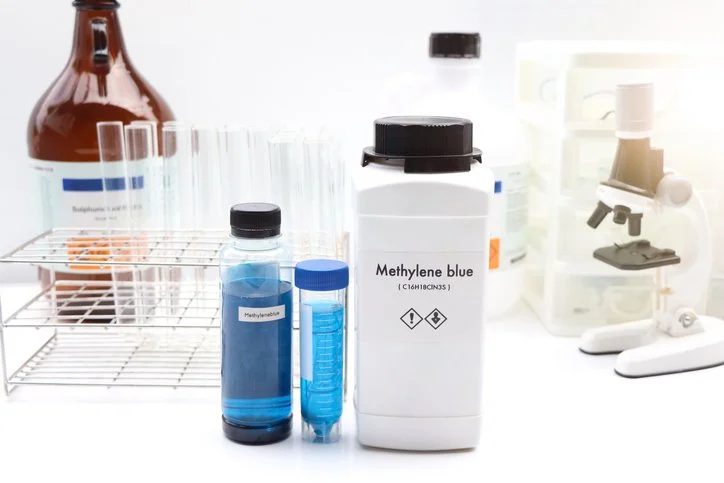
The Allure of Methylene Blue: A Cellular Booster?
In September of 2025, I wrote about methylene blue. Here is a more nuanced take on it. As someone who believes that true health comes from food and healthy living, and that medications should only be used when health is failing, methylene blue should not be taken randomly without professional supervision.
Methylene blue’s appeal lies in its ability to act as a mitochondrial enhancer. As Dr. Cassie Smith, a functional medicine endocrinologist, explains, it supports mitochondrial respiration, increases ATP production (the body’s cellular fuel), reduces oxidative stress, and improves oxygen delivery to the brain. These effects can translate to heightened energy, sharper focus, and resilience against chronic conditions. In her practice, Smith uses low-dose methylene blue for patients struggling with post-viral fatigue, cognitive decline, ADHD, burnout, and chronic inflammation, often as part of a broader protocol including IV therapies, hormone balancing, and mitochondrial nutrients like CoQ10 and PQQ. She describes it as a “cellular booster,” helping systems function more efficiently at a microscopic level, particularly for those with mitochondrial dysfunction—a common thread in conditions like long COVID and Lyme disease. The excitement isn’t unfounded. Research supports methylene blue’s potential. A 2011 study in PLoS ONE found it selectively reduces mitochondrial superoxide, offering neuroprotection, while a 2009 study in Neurotoxicity Research demonstrated behavioral and metabolic benefits in optic neuropathy models. These findings fuel its use in alternative health circles, where biohackers and clinicians alike see it as a tool to address the root causes of fatigue and cognitive fog. For those waking up tired despite clean diets and ample sleep, methylene blue’s promise of a cellular “rush”—a surge of energy or mental clarity—can feel like a game-changer.
The Hidden Risks: A Synthetic Intruder

Yet, the enthusiasm comes with a caveat. The GreenMedInfo Research Group argues that methylene blue’s synthetic nature makes it a foreign entity to human biology. Synthesized from coal tar, its chemical structure—containing sulfur and nitrogen in heterocyclic rings—didn’t evolve alongside our physiological systems. Our bodies, finely tuned over millions of years to interact with natural compounds, may struggle to process this “alien intruder.” GreenMedInfo advocates for a “less is more” toxicology model, challenging the traditional “dose makes the poison” paradigm.
Founder Sayer Ji suggests that even minute amounts of synthetic chemicals like methylene blue could trigger cascading effects, disrupting delicate biological feedback loops, enzyme functions, and cell signaling in ways that may not be immediately apparent but could accumulate over time—the medical literature documents concerning adverse effects, particularly at higher doses. Serotonin syndrome, a potentially life-threatening condition caused by excessive serotonin activity, has been reported when methylene blue is combined with serotonergic medications, as noted in a 2010 study in the Journal of Neurology, Neurosurgery & Psychiatry. Hemolytic anemia, especially in patients with glucose-6-phosphate dehydrogenase (G6PD) deficiency, is another risk, with a 2002 study in Veterinary and Human Toxicology linking it to red blood cell destruction. Neurotoxicity is also a concern; a 2008 study in Anesthesiology found detrimental effects on the developing central nervous system in animal models. Cardiovascular effects, including severe hypertension, cardiac arrhythmias, and decreased cardiac output, were highlighted in a 2003 review in the American Journal of Therapeutics. While biohackers typically use lower doses than those associated with these risks, the lack of long-term safety studies raises questions about the consequences of chronic use.
The “Rush”: Why It Happens and What It Means

The sensation of a “rush” reported by some methylene blue users likely stems from its mitochondrial and neurological effects. By acting as an electron carrier in the mitochondrial respiratory chain, methylene blue enhances ATP production and oxygen utilization, potentially leading to a burst of cellular energy that manifests as heightened alertness or focus. Its role as a monoamine oxidase inhibitor may also influence neurotransmitter activity, contributing to a stimulatory effect. Dr. Smith’s clinical observations align with this, noting improved “brain stamina” in patients, which could be perceived as a “rush.” However, neither article explicitly uses the term, and the sensation remains anecdotal, often discussed in biohacking communities rather than peer-reviewed literature. Is this “rush” good or bad? It depends. For individuals with mitochondrial dysfunction or chronic fatigue, the boost in energy and clarity could be therapeutic, offering relief from debilitating symptoms. Dr. Smith’s patients, for example, report benefits when methylene blue is used under medical supervision, carefully dosed, and paired with complementary therapies. However, the same mechanisms driving this effect could pose risks if mismanaged. Overstimulation from excessive dosing or interactions with medications (e.g., antidepressants) could lead to adverse effects like anxiety, rapid heart rate, or serotonin syndrome. GreenMedInfo warns that even low doses may disrupt biological homeostasis over time, potentially causing subtle, cumulative damage that’s hard to detect until significant harm occurs.
A Precautionary Approach: Balancing Benefits and Risks

The contrasting perspectives highlight a critical tension: methylene blue’s potential benefits come with significant unknowns. GreenMedInfo advocates for the precautionary principle, arguing that synthetic compounds like methylene blue should be considered risky until proven safe through rigorous, long-term studies. They suggest limiting its use to life-threatening emergencies, favoring natural alternatives like high-dose vitamin C, hyperbaric oxygen, or artemisinin for conditions like methemoglobinemia or malaria. These natural options, they argue, work with the body’s innate healing mechanisms, avoiding the disruption caused by synthetic chemicals. Dr. Smith, while cautious, sees a place for methylene blue in functional medicine when used judiciously. She emphasizes low, controlled doses, thorough screening for medication interactions, and medical supervision to mitigate risks. Her approach integrates methylene blue into a holistic protocol, not as a stand-alone solution, ensuring it supports rather than overrides the body’s natural processes. Yet, she warns against DIY experimentation, noting that improper use can lead to nausea, dizziness, or more severe complications.
A Path Forward: Informed Caution

Methylene blue’s rise as a health trend underscores a broader issue in modern medicine: the allure of quick fixes versus the need for holistic, root-cause approaches. Its ability to enhance mitochondrial function and deliver a potential “rush” of energy makes it tempting for those battling fatigue or cognitive decline. However, its synthetic nature and documented risks demand caution. Without long-term safety data, its widespread use—especially outside clinical settings—represents a gamble with human health.
For those considering methylene blue, the path forward is clear: prioritize informed decision-making. Please consult a healthcare provider, ideally one versed in functional medicine, to assess whether it’s appropriate for your needs. Screen for contraindications, such as G6PD deficiency or serotonergic medication use, and start with the lowest effective dose. Explore natural alternatives first, as they may offer similar benefits with fewer risks. Above all, recognize that true healing comes from supporting the body’s innate intelligence, not overriding it with synthetic interventions.
Methylene blue is neither a miracle nor a menace—it’s a tool with potential and pitfalls. By approaching it with curiosity, caution, and respect for our biological complexity, we can navigate its promises without falling prey to its perils.