Debunking the Debunkers Who Debunked the Debunkers: Why Ancestral Wisdom Still Beats Expert Flip-Flops
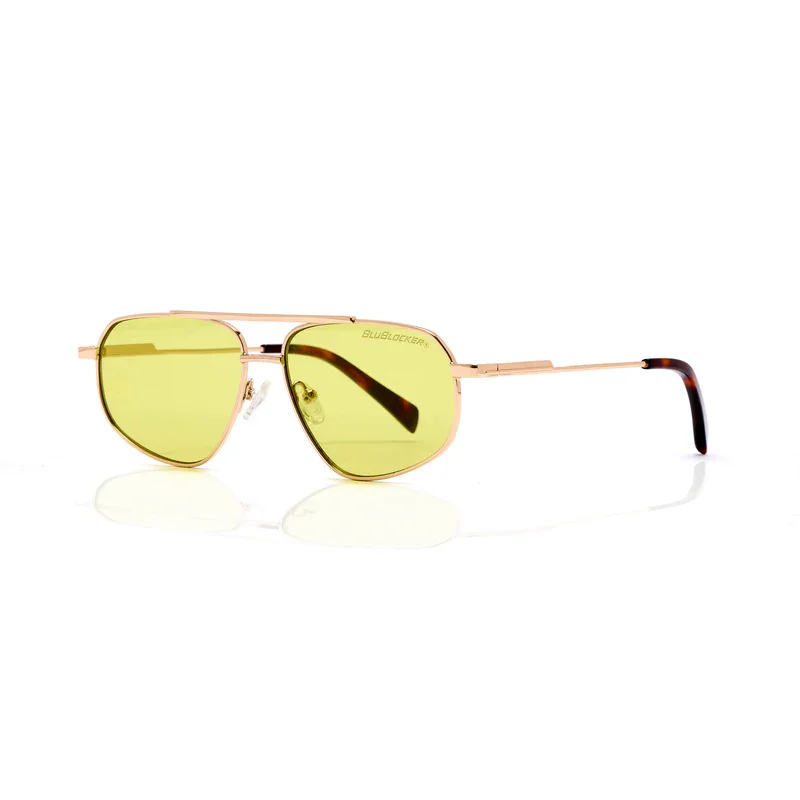
I recently stumbled across Scott Carney while doom-scrolling health content late one night. In a polished video, he took aim at Andrew Huberman, the Stanford neuroscientist turned mega-podcaster, accusing him of outright fraud for marketing “blue-block” glasses. Carney’s point was sharp: Huberman had earlier gone on record saying these glasses were basically useless, yet now sells them (or at least endorses them heavily) to his massive audience. The irony wasn’t lost on me. Here was a professional debunker exposing what looked like classic influencer grift—flip-flopping for profit while millions hang on every word.

Curious, I kept watching. Carney then sat down with Taylor Lorenz, the Washington Post journalist known for her deep dives into internet culture. The conversation turned to public-health sacred cows like fluoride in drinking water. Lorenz spoke in broad, confident strokes: these interventions have been “proven safe and effective,” they’re the standard of care, and therefore they sit above serious question. She lumped alternative approaches—such as simply eating unprocessed foods—into the same dismissive bucket as conspiracy theories. To her, the mere existence of institutional approval was sufficient proof.
Here’s the thing: I happen to be far more knowledgeable on these topics than Lorenz presented herself as being. I’ve spent years studying human physiology, evolutionary biology, toxicology, and the actual literature on both fluoride and photobiology. What she was doing—passing herself off as the superior authority while waving away potentially valid concerns—mirrored exactly the behavior she and Carney had just criticized in Huberman. It was debunkers debunking debunkers, only to install their own new set of unquestionable truths.
This pattern left me wondering: how is the average person supposed to navigate their medical and health options in 2026? Every week, a new podcast, Substack, or YouTube exposé claims to “finally tell you the truth” about some supplement, drug, or lifestyle hack. Yet the very people doing the exposing often reveal the same human flaws—selective skepticism, appeal to authority when convenient, and a quiet disdain for anything that smells like “ancestral” or “natural.” Carney and Lorenz repeatedly nodded to the well-documented shortcomings of modern medicine: over-prescription, corporate capture of research, and the replication crisis that plagues even prestigious journals. Fair enough. But then they pivoted to defend fluoride, statins, or seed oils as somehow magically exempt from those same systemic problems. The message to viewers is: trust the process… except when we say otherwise.
In the end, most of us are left hoping the next piece of information we encounter on the internet is actually the best one for us. I’m fortunate. My training in evidence-based evaluation—combined with a deep reading of primary literature—lets me sift the signal from the noise. But I watch friends, family, and online strangers chase one expert rabbit hole after another, only to emerge more confused and sometimes actively harmed. The average person doesn’t have the time, background, or statistical literacy to spot when a debunking video is itself guilty of the very sins it claims to expose.
That’s why I’ve landed on a different compass entirely: stay skeptical, stay curious, and return to the principles of ancestral medicine.

Ancestral medicine is not a branded supplement line or a nostalgic fad. It is the practical application of what human beings evolved with for roughly 300,000 years before agriculture and industrialization. Our physiology is still tuned to the environmental cues our hunter-gatherer ancestors experienced daily. Instead of outsourcing health to the latest randomized controlled trial (which may or may not replicate next year), ancestral medicine asks a simpler question: what did humans do when we were thriving without pharmaceuticals, processed foods, or artificial lighting?
The examples are straightforward and powerful.

Proper sleep is the foundation. Our ancestors rose and slept with the sun. Their circadian rhythms were anchored by bright, full-spectrum daylight in the morning and complete darkness after sunset. Today we bathe our retinas in blue light from screens until 2 a.m., then wonder why melatonin production is suppressed, and cortisol stays elevated. Ancestral sleep hygiene means dimming lights after sunset, wearing blue-blocking glasses only if you’ve already cut off artificial light, and treating bedtime as non-negotiable. Studies on hunter-gatherer groups like the Hadza and San consistently show that they average 7 to 8 hours of high-quality sleep without sleep aids—something few modern adults can claim.
Proper sun exposure is equally foundational. For most of human history, we lived outdoors. Midday sun on bare skin triggered vitamin D synthesis, nitric oxide release for vascular health, and direct circadian entrainment via the eyes and skin. Today, we slather SPF 50, stay indoors under fluorescent lights, and then supplement with questionable-bioavailability pills. Ancestral sun practices are simple: 15–30 minutes of direct midday exposure (depending on latitude and skin type) several times a week, without burning, while still getting the infrared and UVA that modern sunscreens block. The result is better mood regulation, immune function, and even mitochondrial health—benefits that no pill has yet matched in long-term population data.
Other pillars follow the same logic. Eating unprocessed, seasonally available foods mirrors the nutrient density our guts evolved to handle. Movement patterns—walking, carrying, climbing, occasional sprinting—build resilience without the repetitive-stress injuries of gym machines. Cold and heat exposure (rivers in winter, saunas or sweat lodges in summer) train the autonomic nervous system in ways that cold plunges and infrared saunas are only now rediscovering. Social connection in small bands provided the psychological safety net no therapist app can replicate.
None of these practices requires a prescription, a subscription, or a celebrity endorsement. They require attention, consistency, and—most importantly—a willingness to question whichever expert happens to be loudest this week. When Carney calls out Huberman’s inconsistency, he’s right to demand accountability. When Lorenz appeals to “standard of care” as infallible, she’s repeating the same error she criticizes elsewhere. Both moments illustrate why blind trust in any single voice is dangerous.
The beauty of ancestral medicine is that it doesn’t claim to be the final word from on high. It simply says: your body already knows what worked for 10,000 generations. Test it yourself. Track your sleep with the sun, feel the difference after a week of real daylight, eat the way your great-great-grandparents would have recognized, and notice how your energy, mood, and resilience shift. If a new study or influencer contradicts those results, apply the same skepticism you’d apply to any other claim.
I’m not anti-science. I’m anti-dogma disguised as science. The replication crisis, the funding biases, the regulatory capture—these are real. Debunkers serve a role by exposing fraud and hype. But when they install their own unexamined orthodoxies in place of the old ones, they can become part of the problem.
So the next time you see a viral takedown of some health guru, pause. Ask yourself: Is this person applying consistent standards, or just trading one authority for another? Then go outside, look at the sky, feel the ground beneath your feet, and remember that the oldest, most robust data set we have is written into our DNA by evolution itself.
That’s not anti-modern. It’s the ultimate realism. In a world of endless expert flip-flops, ancestral medicine remains the quiet, reliable north star. Stay skeptical. Stay curious. And above all, stay close to the way humans actually thrived for millennia. Your body will thank you—and you won’t need the next viral debunking video to tell you so.