Do We Really Need Band-Aids? Science, Evolution, and the Myth of Airtight Healing
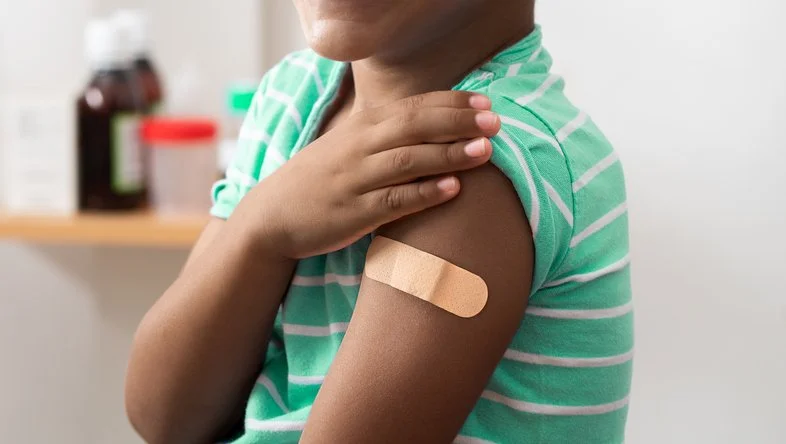
Disclaimer: This article is provided for general informational and educational purposes only and is not intended to be, nor should it be construed as, medical advice, diagnosis, or treatment. The discussion of wound healing, Band-Aids, air exposure, and related studies reflects publicly available research and evolutionary observations but does not replace individualized professional medical guidance. Wound-care decisions can vary significantly based on your personal health history, the specific nature of an injury, underlying conditions, or risk factors. Always consult a qualified healthcare professional (such as a physician, nurse practitioner, or wound-care specialist) before changing any wound-management practices, especially if you have diabetes, poor circulation, immune compromise, or signs of infection. If you experience increasing pain, redness, swelling, pus, fever, or any other concerning symptoms, seek immediate medical attention. The author and publisher assume no liability for any injury, loss, or damage resulting from the use or misuse of information contained in this post.

It is springtime at the time of writing; it is fat-tire beach-bike riding season for the next eight months. One of the bikes I use when I need to get to another beach town quickly is electric and weighs eighty pounds. When I go down, it is not unusual for my shins to hit the pedals, which can scrape the skin off the area covering my shin bone. So when I got my first scrape in May, protecting the area seemed to be the logical move. Plus, I did not want to soil my pants and bedding later that day, so I placed a gauze bandage over the wound. I removed it the next day to inspect the wound. The bandage had adhered to the scab, so when I removed it, I reinjured the area and caused it to bleed. Additionally, I had tenacious adhesive residue that caused irritation as I tried to remove it. It got me thinking that I should have let it be instead of covering it, which led me to look into the research to see if that was a valid option.
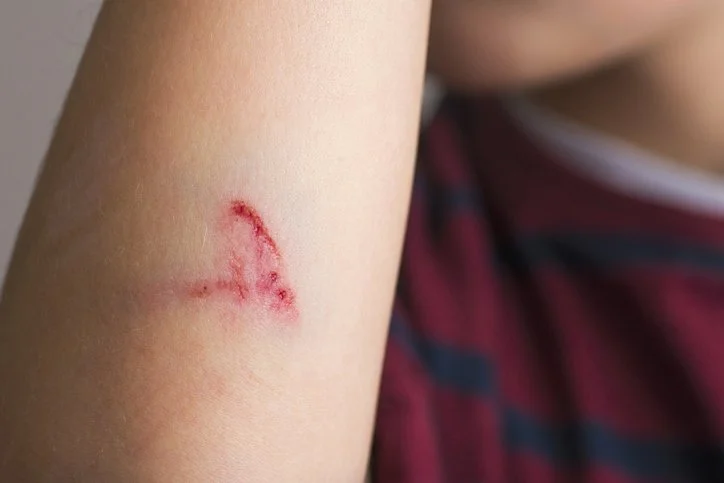
From scraped knees on the playground to slips with a kitchen knife, our first response is usually to reach for a Band-Aid. We’ve been conditioned to believe that covering a wound protects it from infection and speeds recovery. Yet a simple observation challenges this assumption: no animal in the wild uses bandages, gauze, or occlusive dressings. Lions, deer, birds, and even our closest primate relatives sustain cuts, bites, and abrasions daily and rely on evolutionary mechanisms—exposure to air, licking, and scab formation—to heal. If nature designed wound repair without external coverings, are Band-Aids truly essential for minor injuries, or have we medicalized a process that often works best when left alone?

Evolution provides the foundational argument. Recent research comparing wound-healing rates across mammals reveals striking differences. Humans heal approximately 3 times more slowly than other primates and rodents, at around 0.25 mm per day, compared with 0.613–0.8 mm per day in chimpanzees, baboons, and mice.¹ This slower pace likely stems from an evolutionary trade-off: as humans lost most body hair and developed sweat glands for endurance running in hot climates, we sacrificed dense hair follicles rich in stem cells that accelerate skin regeneration in furred mammals.² Despite this, our ancestors survived without adhesive bandages or sterile pads. Wild animals expose wounds to air, allow scabs to form naturally, and benefit from saliva containing antimicrobial enzymes and growth factors. Social behaviors in primates—grooming and group protection—further offset slower individual healing.³ In short, evolution did not equip us (or any species) with a need for manufactured coverings; it designed healing around open-air exposure and the body’s own defenses.
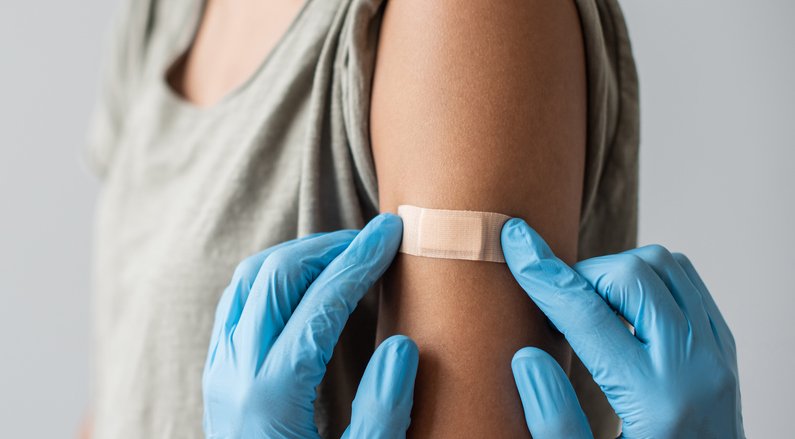
Modern wound-care dogma, however, pushes the opposite. Since the 1960s, the prevailing wisdom has been that “moist wound healing” outperforms dry, air-exposed healing. George Winter’s landmark 1962 study on superficial wounds in pigs demonstrated that occlusive dressings (creating a moist environment) doubled the rate of epithelialization compared with air exposure, which formed a hard scab that impeded cell migration.⁴ This research revolutionized clinical practice, leading to the widespread use of adhesive bandages, hydrocolloids, and films that maintain moisture and supposedly reduce pain, scarring, and healing time. Cleveland Clinic and UPMC guidelines today echo this, warning that airing out wounds dries surface cells, promotes cell death, and slows recovery.⁵
Yet newer, higher-quality evidence questions blanket application of the moist-healing rule—especially for clean, primarily closed wounds. A 2022 systematic review and meta-analysis of randomized controlled trials examined immediate air exposure versus dressings (gauze, film, or tissue glue) after primary closure of clean and clean-contaminated surgical wounds. The analysis found no statistically significant benefit from dressings; air exposure performed equivalently in infection rates, healing speed, and complications.⁶ Multiple Cochrane-backed meta-analyses on early versus delayed dressing removal reached the same conclusion: removing dressings within 48 hours (allowing earlier air exposure) does not increase infection risk and may enable earlier detection of problems while reducing costs and hospital stays.⁷ These findings align with real-world observations that small, superficial cuts and scrapes often form protective scabs and heal uneventfully when left uncovered, provided the environment is relatively clean.
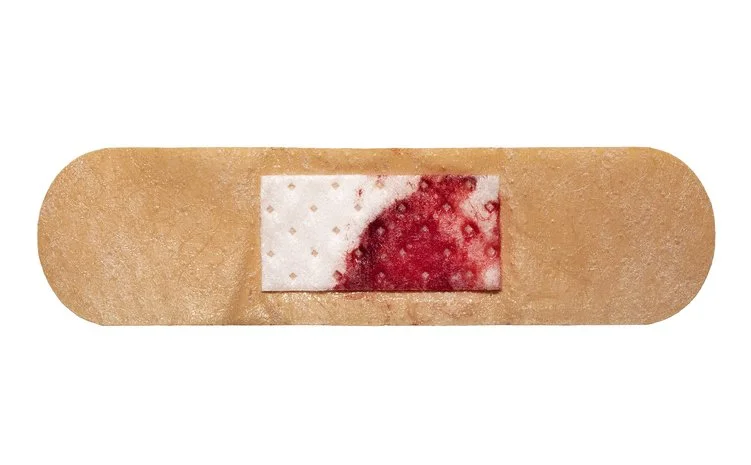
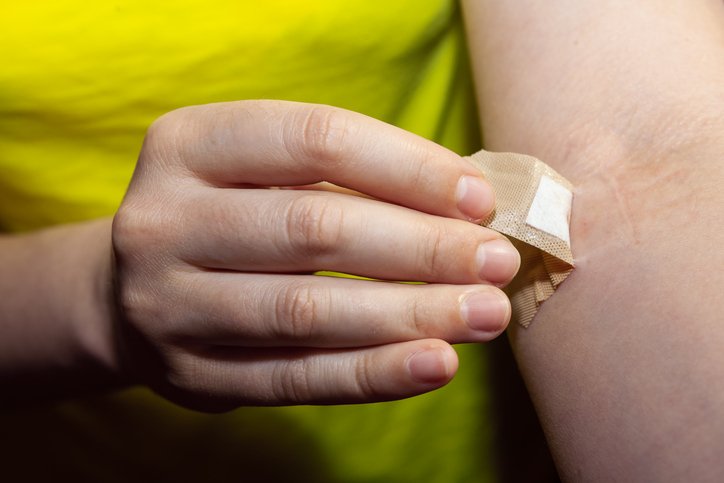
The downside of routine bandaging becomes clearer when we consider maintenance issues. Bandages are not sterile forever. If left unchanged for days, they trap moisture, dead skin cells, and exudate, creating an ideal breeding ground for bacteria. Studies on microbial contamination show that open but unused portions of wound dressings stored at home can harbor pathogens, and during dressing changes in clinical settings, the surrounding environment frequently becomes contaminated with Staphylococcus aureus and other organisms.⁸ Prolonged occlusion without regular changes can paradoxically increase infection risk compared with natural exposure, particularly if the bandage becomes wet, dirty, or adhered to the wound bed. Allergic reactions to adhesives, maceration of surrounding skin, and delayed visual inspection further tip the scales against automatic, long-term use. For minor household injuries, the very tool meant to protect can introduce more harm than good if forgotten or mismanaged.
This is not to say bandages have no role. In high-contamination environments—hands, feet, or areas exposed to dirt, clothing friction, or repeated trauma—covering provides mechanical protection and a barrier against gross debris. Pressure ulcers on heels or certain chronic wounds may also benefit from controlled moisture or drying, depending on the case.⁹ But for the average paper cut, minor abrasion, or clean surgical incision, evidence increasingly supports that Band-Aids are optional rather than mandatory. Evolution’s track record and recent meta-analyses suggest our bodies are equipped for open-air healing in low-risk scenarios.
Useful Tips for Smarter Wound Care
Practical advice is essential in this context. First, always clean the wound thoroughly with mild soap and water or saline—removing debris is far more important than covering. For minor cuts and scrapes in clean environments, consider skipping the bandage entirely after initial cleaning; let a scab form naturally and monitor for signs of infection (redness, swelling, pus, fever). If you do use a bandage, change it daily or sooner if wet or soiled to avoid the contamination risks outlined above. Apply a thin layer of petroleum jelly or antibiotic ointment only if the wound is in a high-friction area, but avoid over-application that creates excess moisture. Keep the wound elevated when possible to reduce swelling. Watch for healing progress: most minor wounds epithelialize within 7–10 days. Seek medical attention if pain increases after 48 hours, redness spreads, or fever develops. Finally, trust your body’s evolutionary blueprint—air exposure is not the enemy; neglect and poor hygiene are. By questioning automatic bandaging, we align modern habits more closely with biology and evidence, potentially saving time, money, and unnecessary plastic waste.
Footnotes and References
¹ Matsumoto-Oda A, et al. Inter-species differences in wound-healing rate. Proc Biol Sci. 2025. (PMC12040475) ² Smithsonian Magazine / IFLScience reporting on the same 2025 primate wound-healing study, April–May 2025. ³ New Scientist coverage of human-primate healing divergence, April 30, 2025. ⁴ Winter GD. Formation of the scab and the rate of epithelialization of superficial wounds in the skin of the young domestic pig. Nature. 1962;193:293-294. ⁵ Cleveland Clinic. “Should You Bandage a Cut or Sore or Let It Air Out?” March 10, 2021. ⁶ Wang F, et al. Immediate air exposure vs dressings following primary closure of clean and clean-contaminated surgical wounds: a systematic review and meta-analysis of randomized controlled trials. PubMed. 2022 (PMID 36622377). ⁷ Zhang T, et al. Comparison of Early and Delayed Removal of Dressing Following Primary Closure of Clean and Contaminated Surgical Wounds. Cochrane Database Syst Rev updates and related meta-analyses, 2020. ⁸ Templeton S, et al. Microbial contamination of open-but-unused portions of wound dressings. PMC7950122, 2017; also Sergent AP, et al. Bacterial contamination of the hospital environment during chronic wound dressing change. PubMed 22560592, 2012. ⁹ Cleveland Clinic guidelines on exceptions for small scabs and pressure ulcers, 2021.