Whole Foods vs. Ultra-Processed: Why Traditional Diets Hold the Key to Modern Health

We don't observe chronic disease among modern people who eat unprocessed food. The work of Weston A. Price from the 1930's and more recent studies of the Kitavans of the Trobriand Islands in Papua New Guinea and the Tukisenta of the New Guinea highlands provide striking examples. These populations, living on traditional diets of tubers, fish, coconuts, fruits, and vegetables with virtually no processed carbohydrates or industrial seed oils, show rates of heart disease, stroke, diabetes, obesity, and hypertension that are virtually zero, even into old age.¹ Their leanness, stable blood pressure, and absence of Western diseases stand in sharp contrast to populations consuming the standard modern diet heavy in ultra-processed foods (UPF).
Recent peer-reviewed research from 2024 and 2025 now provides robust confirmation of what these traditional diets have long suggested. Higher consumption of UPFs is consistently linked to poorer health, while emphasizing whole or minimally processed foods (fresh produce, unrefined grains, meats, dairy, and fish with little or no additives) yields measurable benefits. The evidence spans large umbrella reviews of observational data and randomized controlled trials, painting a consistent picture: reducing UPF intake in favor of whole foods is associated with lower disease risk, better weight control, and improved metabolic markers.

A major 2024 umbrella review by Dai and colleagues analyzed 39 prior meta-analyses and incorporated 122 additional studies covering 49 distinct health outcomes.² The findings were striking. High UPF consumption showed convincing evidence (the strongest category) for increased risk of renal function decline and wheezing in children and adolescents. Highly suggestive evidence linked it to higher rates of type 2 diabetes, overweight/obesity, depression, and common mental disorders. Across the board, the review identified associations with 25 adverse outcomes – and not a single beneficial effect from UPF intake. The authors concluded that dietary patterns low in UPF (i.e., higher in whole and minimally processed foods) "may render broad public health benefits."
Complementing this, Lane et al. published a comprehensive umbrella review in the BMJ in 2024 that synthesized data from 14 meta-analyses involving nearly 10 million participants.³ Their analysis found highly consistent evidence linking greater UPF exposure to 32 adverse health outcomes. These included elevated risks for cardiometabolic conditions (heart disease, type 2 diabetes, hypertension), common mental disorders, certain cancers, and overall mortality. The strength of evidence was particularly strong for cardiometabolic and mental health harms, reinforcing that UPF are not neutral calorie sources but appear actively detrimental when they displace whole foods.
Prospective cohort data add further weight. Vitale and colleagues conducted a systematic review and meta-analysis of prospective studies examining the association between UPF intake and cardiometabolic risk factors.⁴ They documented clear dose-response relationships: higher UPF consumption was associated with approximately 37% higher risk of diabetes, 32% higher risk of hypertension, 47% higher risk of hypertriglyceridemia, 43% lower risk of HDL cholesterol, and 32% higher risk of obesity. These associations remained robust regardless of how UPF intake was measured or the baseline consumption levels in the populations studied. The researchers emphasized that prioritizing minimally processed foods could meaningfully reduce the global burden of cardiometabolic disease.
Randomized controlled evidence takes the case further by demonstrating causality under controlled conditions. A 2025 UCL-led randomized crossover trial (Dicken et al., published in Nature Medicine) is particularly illuminating.⁵ Adults followed two nutritionally matched diets aligned with healthy-eating guidelines (UK Eatwell Guide): one based on minimally processed/whole foods and the other on UPF equivalents. Both diets led to weight loss when participants adhered to them, yet the whole-food arm produced roughly twice the weight loss. Participants on the minimally processed diet saw greater reductions in body fat mass, waist circumference, food cravings, and triglycerides, along with a larger estimated daily calorie deficit (approximately 290 kcal vs. 120 kcal on the UPF arm). The trial lasted eight weeks per arm – one of the longest interventional comparisons to date – and showed that, even when calories and macronutrients are controlled, the level of food processing itself influences satiety, energy intake, and fat loss.
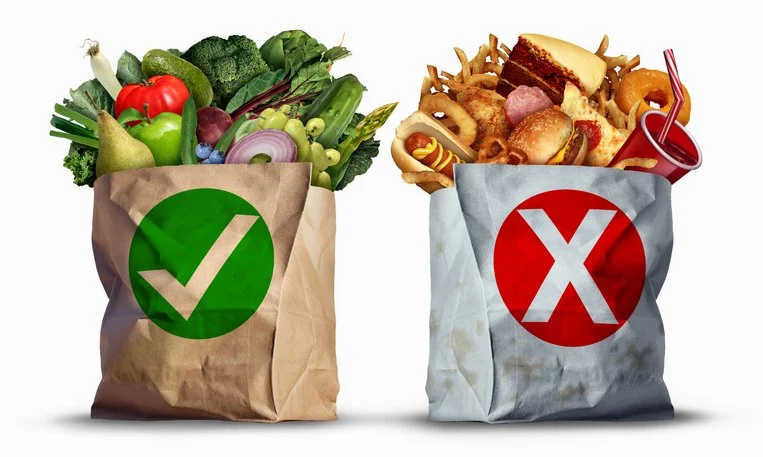
Taken together, these studies highlight several plausible mechanisms. Whole foods retain their natural fiber matrix, micronutrients, and water content, promoting greater satiety and stable blood glucose. They lack the added sugars, refined starches, emulsifiers, flavor enhancers, and industrial seed oils common in UPF that may disrupt gut microbiota, promote inflammation, or override natural appetite regulation. Observational data from traditional societies align perfectly: the Kitavans and Tukisenta consume high-carbohydrate diets (often 70%+ from starchy roots and fruits) yet remain lean and disease-free because their carbohydrates come packaged in whole-food form without the hyperpalatable processing that drives overconsumption.
Caveats are important. Most evidence remains observational at the meta-analysis level, so residual confounding (lifestyle, socioeconomic factors, overall diet quality) cannot be entirely ruled out. However, the randomized trial data, combined with the consistency across hundreds of thousands of participants and multiple independent research groups, strengthen causal inference. Evidence certainty varies by outcome, and more long-term RCTs are needed, particularly in diverse populations. Still, the convergence of findings from traditional populations, large cohorts, umbrella reviews, and controlled trials is compelling. Public health bodies increasingly reference this body of work when recommending reduced UPF intake.
In practical terms, the message is straightforward and actionable. Focus on recognizable, single-ingredient foods: vegetables, fruits, nuts, seeds, legumes, whole grains, pasture-raised meats, wild-caught fish, eggs, and full-fat dairy. Prepare meals at home using herbs, spices, and traditional fats (butter, tallow, olive oil, coconut oil). Minimize or eliminate packaged snacks, sugary drinks, fast food, and anything listing multiple unfamiliar additives. Pay special attention to avoiding refined seed oils (canola, soybean, sunflower) that are ubiquitous in processed foods and linked to oxidative stress when heated or consumed in excess.
Conclusion
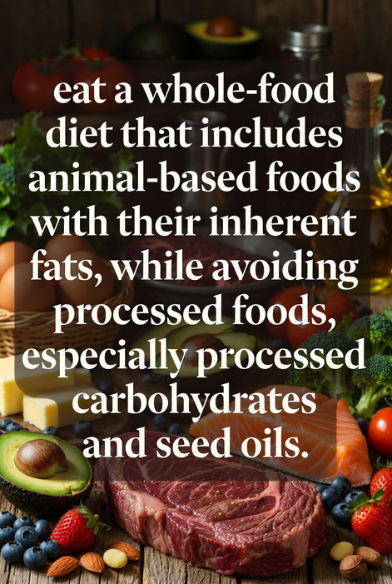
Eat a whole-food diet that includes animal-based foods with their inherent fats, while avoiding processed foods, especially processed carbohydrates and seed oils. This approach mirrors the protective patterns seen in the Kitavans, Tukisenta, Trobriand Islanders, and other traditional groups – and is now backed by the latest high-quality science. Small, consistent shifts toward whole foods can yield outsized returns on health, energy, and longevity. Start today: one meal, one swap at a time. Your body will thank you.
References
Lindeberg S, et al. Cardiovascular risk factors in a Melanesian population apparently free from stroke and ischaemic heart disease: the Kitava study. Journal of Internal Medicine. 1994;236(3):331-340. (Similar patterns documented in Tukisenta and broader Trobriand Island populations consuming traditional unprocessed diets.)
Dai S, et al. Ultra-processed foods and human health: An umbrella review and updated meta-analyses of observational evidence. Clinical Nutrition. 2024;43(6):1386-1394. doi:10.1016/j.clnu.2024.04.016.
Lane MM, et al. Ultra-processed food exposure and adverse health outcomes: umbrella review of epidemiological meta-analyses. BMJ. 2024;384:e077310. doi:10.1136/bmj-2023-077310.
Vitale M, et al. Ultra-Processed Foods and Human Health: A Systematic Review and Meta-Analysis of Prospective Cohort Studies. Advances in Nutrition. 2024;15(1):100121. doi:10.1016/j.advnut.2023.09.009.
Dicken SJ, et al. Ultraprocessed or minimally processed diets following healthy dietary guidelines on weight and cardiometabolic health: a randomized, crossover trial. Nature Medicine. 2025. doi:10.1038/s41591-025-03842-0. (UCL-led study reported August 2025.)