Navigating the Cultural and Societal Maze of Healthy Eating

In my practice, I incessantly discuss how what we eat can determine the health of our mouths (and the rest of us). I am met with a variety of reactions, many of which are similar to the reaction one would expect when discussing a flaw in their religious beliefs. Like political and religious beliefs, healthy eating is more than a personal choice; it's a cultural artifact shaped by history, media, economics, and social norms. In many societies, food serves as a symbol of identity, community, and even morality. Think of the Mediterranean diet, often romanticized as a blueprint for longevity, or the rise of veganism tied to ethical and environmental concerns. Yet beneath these narratives lies a tension between established wisdom and emerging paradigms, in which what we eat reflects broader societal values, such as discipline, indulgence, or rebellion.
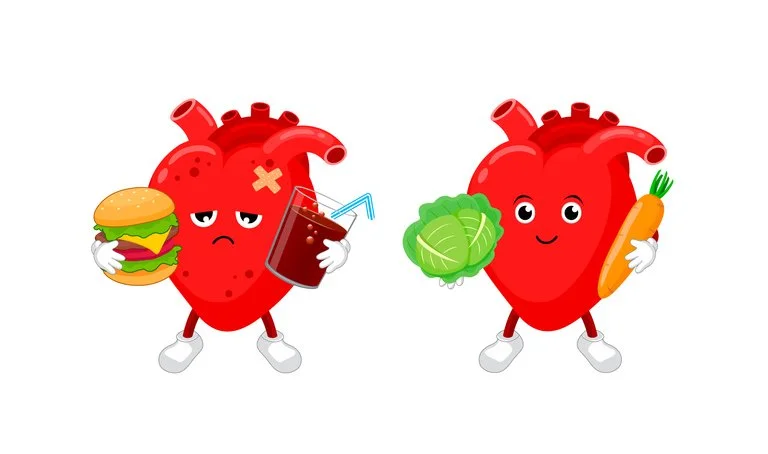
Guidelines from institutions like the American Heart Association and government bodies have long dominated mainstream thinking on healthy eating because people assume they come from the highest authorities. These emphasize balanced plates with plenty of whole grains, fruits, vegetables, lean proteins, and limited fats—especially saturated ones. The diet-heart hypothesis, popularized in the mid-20th century by Ancel Keys, posits that dietary saturated fats raise blood cholesterol, leading to atherosclerosis and heart disease. This idea gave rise to low-fat diets, margarine over butter, and the vilification of eggs and red meat. Culturally, it aligned with post-war prosperity's push for processed foods and convenience, while societally, it fueled public health campaigns that equated high cholesterol with poor lifestyle choices, stigmatizing those who deviated.
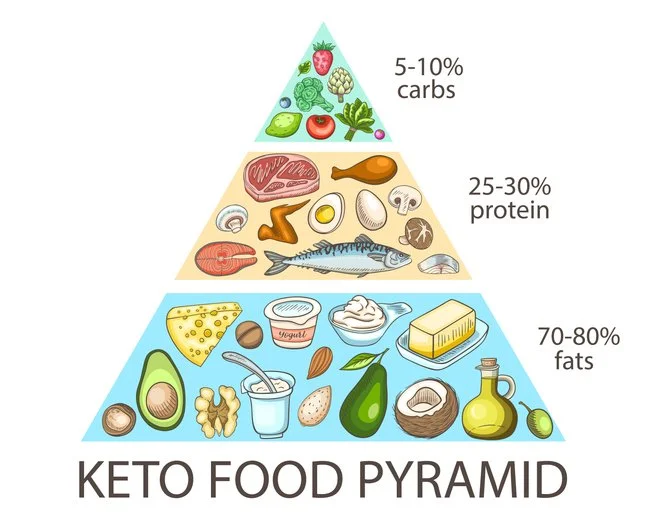
However, newer concepts challenge this orthodoxy by drawing on metabolic research and personalized nutrition. Low-carbohydrate and ketogenic diets, for instance, flip the script by prioritizing fats and proteins over carbs, arguing that insulin resistance—not fat intake—drives chronic diseases like obesity and diabetes. These approaches resonate in wellness communities influenced by biohacking and ancestral eating, where apps track macros and influencers tout intermittent fasting. Societally, they appeal to those disillusioned with conventional medicine, offering empowerment through self-experimentation amid rising distrust in Big Pharma and the food industry.
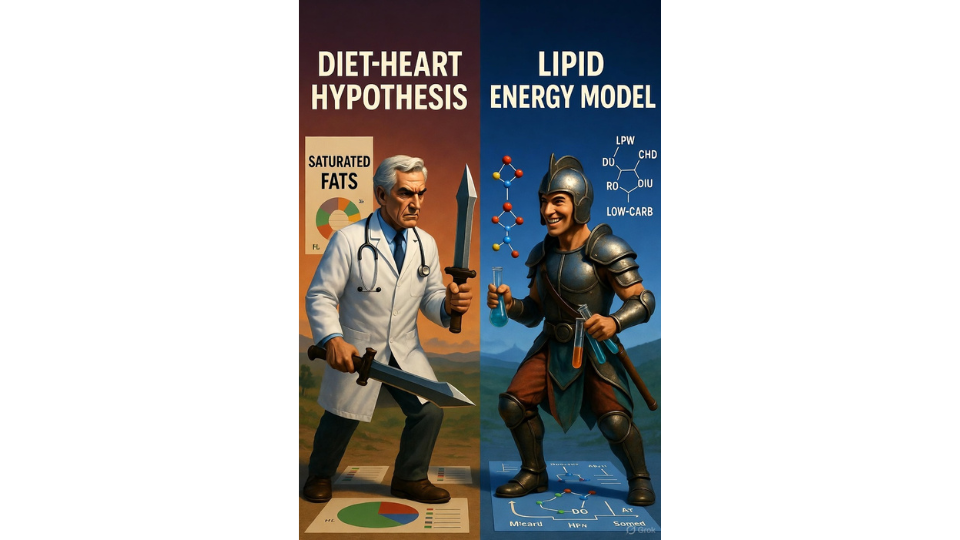
A current example of this shift is the controversy over cholesterol and heart disease. The diet-heart hypothesis has faced scrutiny for selective data in Keys' studies and conflicting evidence from large trials showing no clear link between saturated fat reduction and heart disease prevention. Critics argue it's oversimplified, ignoring factors like inflammation and particle size. Enter the lipid energy model (LEM), recently proposed by Dave Feldman and refined with collaborators like Nick Norwitz. LEM suggests that in lean individuals on carb-restricted diets—termed "lean mass hyper-responders" (LMHRs)—elevated LDL cholesterol isn't inherently pathogenic but a marker of efficient energy trafficking. Here, the body ramps up lipid production to fuel cells when carbs are scarce, leading to high LDL, low triglycerides, and high HDL, potentially without plaque buildup. This model gained traction through a 2025 study showing no progression of artery plaque in LMHRs despite high LDL levels, challenging the notion that all high cholesterol spells doom.

The backlash has been fierce, often veering from science into personal territory. Statements against LEM's creators reveal a pattern of ad hominem attacks, hatred, anger, and ridicule of the person, not their ideas. For example, in discussions around Feldman's work, critics have labeled him a "non-biomedical trained keto advocate" with undisclosed biases, implying his engineering background disqualifies him from lipid research. One prominent voice, Spencer Nadolsky, accused the study of "scientific spin" and filed an ethics complaint, calling it "extremely unethical" for potentially misleading people on diet risks. Kevin Klatt echoed this, highlighting conflicts of interest and decrying the work as harmful propaganda.
Nick Norwitz, a Harvard-trained MD-PhD who experienced LDL spikes on keto, has faced similar vitriol. His research, including a paper showing high LDL in metabolically healthy people doesn't predict heart disease, was dismissed as "shocking" and contrary to beliefs, with some implying he's recklessly endangering lives by questioning statins. In online forums, detractors ridicule him as part of a "keto cult," angry that his findings undermine lucrative pharmaceutical narratives. Peter Attia, in a podcast with Feldman, reportedly lost composure, calling low-carbers "LDL deniers" and condescendingly treating Feldman as a novice rather than a peer, prompting accusations of emotional defensiveness. Comments from that episode highlight Attia's "disdain" and "poor form," with one listener noting he "launched an ad hominem attack" seconds after criticizing others for the same. You can hear Dr. Attia and Dave's discussion, along with Dr. Norwitz's take, here.

These base attacks—focusing on character over data—stem from several reasons. First, cognitive dissonance: entrenched experts, whose careers rest on the diet-heart paradigm, feel threatened by outsiders like Feldman, a software engineer turned citizen scientist. Societally, nutrition is tribal; low-carb advocates are often painted as fringe, evoking anger from those invested in consensus. Economically, challenging cholesterol's villainy questions billions in statin sales, leading to ridicule as a defense mechanism. Hatred arises from fear—fear of paradigm shifts that could render decades of advice obsolete, or worse, harmful. An ad hominem attack sidesteps rigorous debate because dismantling LEM scientifically requires confronting uncomfortable evidence, such as Mendelian randomization studies showing that lifelong low LDL reduces risk, but it also requires addressing the lean mass hyperresponder "paradox". Instead, anger and mockery maintain the status quo, appealing to authority over inquiry.

Culturally, this mirrors broader societal divides: traditional vs. progressive, collectivist guidelines vs. individualized health. Mainstream eating promotes equality through universal rules, while newer concepts empower niches, fostering resentment. Yet, this polarization harms progress. Ridicule stifles innovation, as seen in the historical dismissals of germ theory by Fracastorius and of heliocentrism by Copernicus.
The way forward lies not in consensus, which can entrench errors, nor in personal vendettas, but in adhering strictly to the scientific method, which means hypothesis testing through replicable experiments, such as larger LMHR trials with controls, transparent data sharing, and peer review free of bias. Feldman's crowd-funded studies exemplify this grassroots approach, prioritizing falsifiability over dogma. By embracing curiosity over certainty, we can refine healthy eating beyond cultural biases, ensuring societal norms evolve with evidence. In the end, true health thrives on inquiry, not ideology.