The Hidden Value of "To Don't" Lists: Studies and Strategies to Eliminate Time Wasters
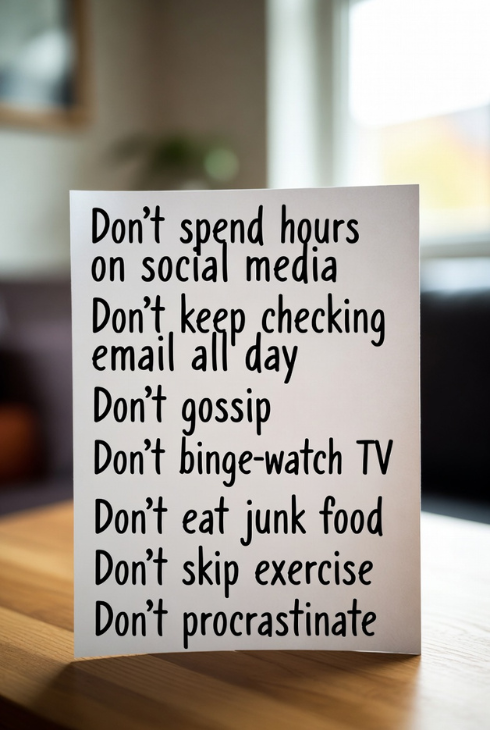
We live in an era where productivity is king. Apps, planners, and seminars promise to optimize every minute of our day through meticulously crafted to-do lists. But what if the secret to true efficiency lies not in doing more, but in doing less? Enter the "to don't" list—a deliberate inventory of activities to avoid because they drain our resources without adding value. Unlike a to-do list that pushes us forward, a "to don't" list acts as a guardrail, steering us away from pitfalls that lead to stagnation or even setback. By recognizing and eliminating these time sinks, we free up space for tasks that foster growth, creativity, and fulfillment. As simple as it sounds, this approach can transform how we approach our daily lives, turning wasted hours into opportunities for progress.
The idea isn't new, but its importance is backed by solid research. A meta-analysis published in PLOS ONE examined dozens of studies and found that effective time management, which includes avoiding unproductive behaviors, is moderately correlated with better job performance, academic achievement, and overall well-being.[2] The study synthesized data from various sources, showing correlations around r=0.25 for performance outcomes, meaning that people who actively manage their time—often by cutting out distractions—tend to outperform those who don't. This isn't just about work; the benefits extend to personal life, where avoiding certain habits can reduce stress and improve satisfaction. Another review in Frontiers in Education reinforced this, highlighting how strategies like prioritization and task organization (key elements of a "to don't" mindset) enhance productivity and well-being across educational and professional settings.[8] These findings suggest that while adding tasks to our plate might feel productive, the real gains come from subtraction.

Consider the workplace, where time wastage is rampant. According to a 2025 report, 89% of workers admit to wasting time daily, with many losing up to two hours on non-essential activities.[4] One prime candidate for any "to don't" list is excessive email checking. Employees check their inboxes an average of 121 times a day, consuming 28% of their workweek.[1] This constant interruption fragments focus, leading to what researchers call "attention residue"—where your mind lingers on the previous task, reducing efficiency on the next. Instead of reflexively opening your email every few minutes, batch it into specific times, like twice a day. This small shift could reclaim hours for deep work, such as strategic planning or skill-building, which directly contribute to career advancement.

Social media scrolling is another universal time thief that belongs on every "to don't" list. Stats show employees spend about 1.5 hours daily on platforms like Instagram or TikTok during work hours, totaling nearly a full workday lost each week.[1] Beyond work, this habit creeps into personal time; think of those evenings where two hours vanish into endless feeds instead of reading a book or exercising. A Temple University study found that perceived time wastage, including distractions like these, breeds frustration and prompts counterproductive behaviors, such as reduced effort or even sabotage in extreme cases.[0] The dopamine hit from likes and notifications creates an addictive loop, but it rarely leads to growth. By committing to "don't scroll aimlessly," you could redirect that energy toward hobbies or relationships that build lasting fulfillment. For instance, one person I know replaced evening social media with journaling, leading to clearer goals and better sleep—small changes with compounding benefits.

Meetings, often hailed as collaborative necessities, frequently turn into black holes of productivity. A staggering 47% of employees view them as the biggest time-wasters, with an average of 21.5 hours per week spent in discussions that achieve little.[1] Research from Scientific Research Publishing identifies "useless meetings" as a top non-productive activity, where agendas drift, and decisions stall.[3] How many times have you sat through an hour-long call that could have been an email? Adding "don't attend non-essential meetings" to your list encourages scrutiny: Does this require my input? Could it be asynchronous? Opting out or shortening them frees up time for meaningful work, such as project execution or learning new skills. In one study, workers who minimized such interruptions reported higher job satisfaction and output.[8] This applies personally too—skip that obligatory social gathering if it drains you, and use the time for self-care instead.
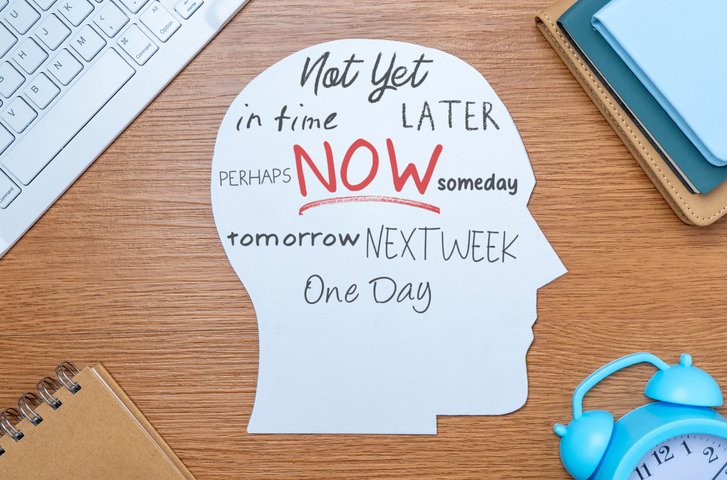
Procrastination is a sneaky entrant on the "to don't" roster, affecting 20% of adults chronically.[4] In the UK, the average employee spends over 2 hours a day putting off tasks, often through "productive procrastination" such as organizing desks rather than tackling priorities.[4] This not only delays progress but also increases stress as deadlines loom. A Frontiers review links poor time management, including procrastination, to lower well-being and burnout.[8] To combat it, add "don't delay important tasks with busywork." Techniques like the two-minute rule—if it takes less than two minutes, do it now—can help. Imagine swapping procrastinating on grocery shopping for actually doing errands; suddenly, your evening is free for a walk or family time, fostering physical and emotional health.

Gossip and non-business chatter also sap energy. About 37% of workers cite it as a major distraction, consuming around 56 minutes daily.[3] While bonding is important, excessive venting about colleagues or unrelated topics diverts focus from goals. Studies show this preoccupation with the "wrong things" reduces overall productivity.[3] On a personal level, think of time spent ruminating on petty dramas instead of pursuing passions. By vowing "don't engage in gossip," you preserve mental bandwidth for constructive activities, such as volunteering or skill-building courses, which promote growth.
Personal activities during prime hours, such as online shopping or planning vacations at work, cost knowledge workers 151 hours annually in lost focus.[4] Similarly, at home, binge-watching shows when you could be exercising or cooking healthy meals can lead to a regression in your health. A 2025 Clockify report notes 58% of employees waste 30 minutes to an hour daily on such distractions.[6] Listing "don't mix personal errands with work time" creates boundaries, boosting efficiency in both spheres.

Overworking itself can be counterproductive. Working 60 hours weekly reduces productivity by 25%, contributing to burnout in 85% of the workforce.[5] A "to don't" entry like "don't work beyond sustainable hours" encourages rest, which research ties to sustained performance.[2]Implementing a "to-don't" list starts small: Review your day weekly, identify drains, and commit to avoidance. Tools like apps that block sites during focus periods can help. Over time, this habit shifts your trajectory from mere busyness to purposeful action.
In conclusion, while to-do lists drive us, "to don't" lists protect us. By sidestepping these common traps, we not only avoid regression but invite growth. As studies affirm, the payoff in productivity and well-being is profound—making this simple tool a game-changer for anyone seeking a more intentional life.
Footnotes
Temple University. Tick tock: Temple research examines effects of wasting employees' time at work. Published November 13, 2024.
Aeon B, Faber A, Panaccio A. Does time management work? A meta-analysis. PLoS One. 2021;16(1):e0245066. doi:10.1371/journal.pone.0245066
Bedi A, Sass M. Boosting productivity and wellbeing through time management. Front Educ. 2025;10:1623228. doi:10.3389/feduc.2025.1623228
Scientific Research Publishing. Time Wasting Activities within the Workplace: Don't Be Apart of Them. 2015.
Runn. Time Management Statistics: Understand Where Your Workday Goes. Published April 30, 2024.
Sym-Smith D. 12 Time Wasters That Suck Your Productivity. LinkedIn. Published June 12, 2025.
Clockify. Effects of Workplace Distractions: Stats to Know in 2025. Published September 23, 2025.
ElectroIQ. Wasting Time At Workplace Statistics (2025). Published February 17, 2025.