The Upside-Down Food Pyramid: A Long-Overdue Revolution in American Nutrition
https://realfood.gov/
My aim with this website is encourage us to eat a whole-food-based diet that includes animal-based foods with their inherent fats, and to avoid processed carbohydrates and seed oils. I am not alone in this, and those of us who believe in this type of diet just received a huge amount of vindication. Indeed, if the government is successful in educating the American public that this is the way to go, my posts may be redundant.
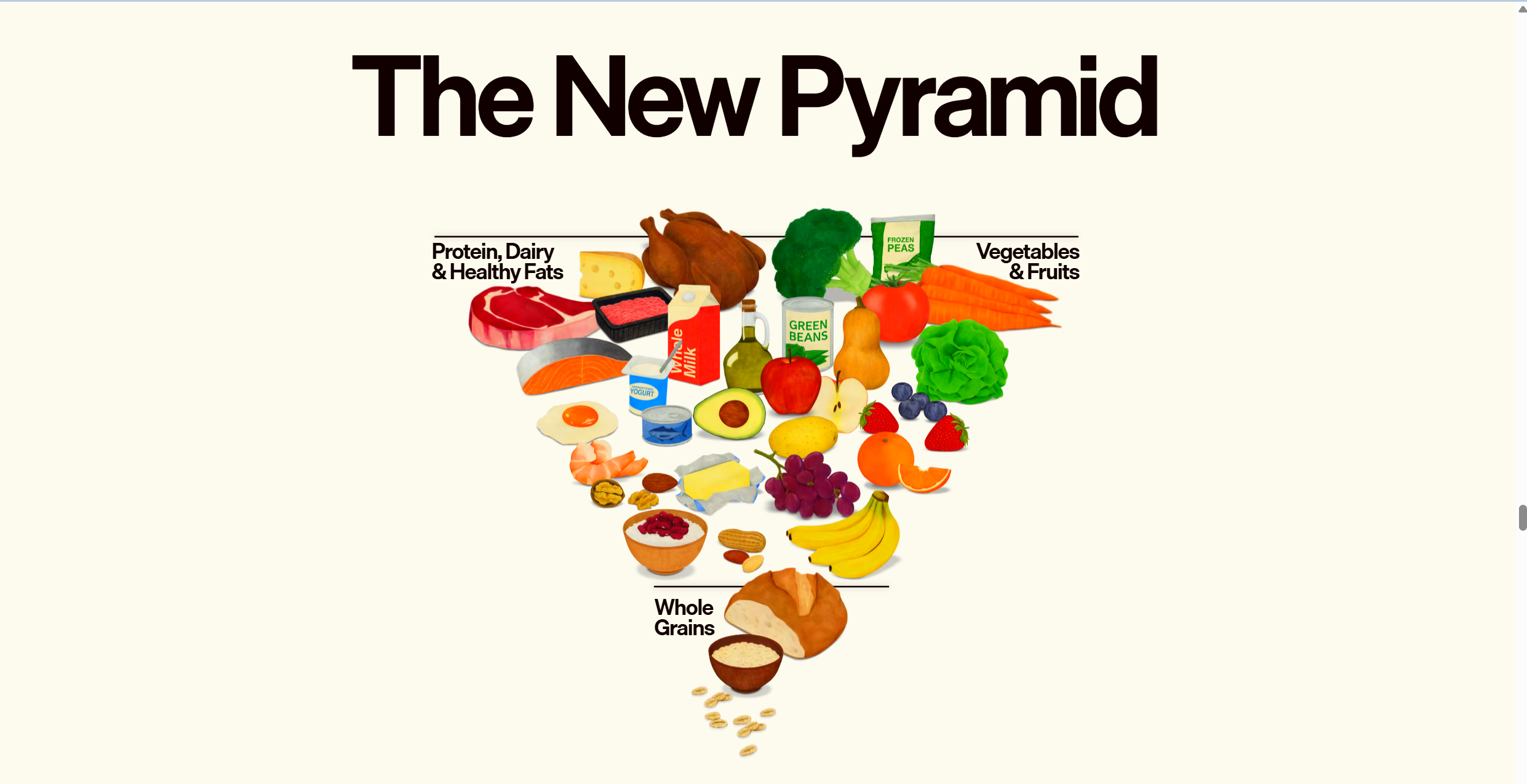
On January 7, 2026, in a White House press conference that felt like a watershed moment for public health, Health and Human Services Secretary Robert F. Kennedy Jr., alongside Agriculture Secretary Brooke Rollins and other officials, introduced a radical overhaul of U.S. dietary recommendations.[1] The centerpiece? An "upside-down" food pyramid that flips the script on the traditional model, which for decades pushed carbohydrate-heavy grains as the foundation of a healthy diet. Instead, this new inverted triangle emphasizes abundance at the top with whole, nutrient-dense foods: proteins including red meat, poultry, fish, eggs, and full-fat dairy; non-starchy vegetables; fruits; healthy fats like butter, olive oil, and beef tallow; and whole grains. At the narrow bottom? Ultra-processed foods, added sugars, and refined carbs—items to be minimized or avoided.[2]

Kennedy didn't mince words during the event, declaring a "war on sugar" and stressing the need to "put real food back at the center of health."[3] He stated, "These new guidelines will revolutionize our nation's food culture and make America healthier again," highlighting how the old pyramid contributed to skyrocketing rates of obesity, diabetes, and chronic diseases.[4] Rollins echoed this, noting that American households "must prioritize whole, nutrient-dense foods—protein, dairy, vegetables, fruits, healthy fats, and whole grains—and name and shame highly processed foods."[5] The guidelines also set limits on added sugars, promote gut health through fermented foods, and encourage full-fat dairy over low-fat options, marking a departure from the low-fat dogma that had long dominated.[6] However, I disagree on this part of the new food pyramid regarding whole grains; most whole grains today are nothing more than highly processed flours with added fiber, stripping away much of their available minerals and potentially misleading consumers about their true nutritional value. Additionally, tooth decay began among the earliest farmers who ate only whole grains. Also, their recommendation to limit saturated fat to 10 percent of total calories can limit fatty meat consumption, which can hamper protein intake.
The timing of this announcement is nothing short of incredible. Just one day earlier, on January 6, 2026, I published a post with a section titled "The Fallacy of Dietary Guidelines: MyPlate and the Food Pyramid," where I delved into the perils of government-backed nutrition advice. In that piece, I argued that the original Food Pyramid, introduced in 1992, and its successor, MyPlate, introduced in 2011, promoted a high-carbohydrate, low-fat diet that lacked robust evidence and contributed to the obesity epidemic.[7] I wrote, "The Food Pyramid emphasized a high-carbohydrate, low-fat diet, with 6–11 daily servings of grains and minimal fats... yet they have faced significant criticism for their lack of robust evidence and potential contribution to obesity and chronic disease." This skepticism wasn't isolated; it mirrored concerns raised by many health advocates over the years. Studies I cited, such as those from The American Journal of Clinical Nutrition in 2018, linked high-carb diets to metabolic syndrome and type 2 diabetes, questioning the very foundations of these guidelines.

Many people—nutritionists, independent researchers, and everyday skeptics—have known about the dangers of our government's dietary recommendations for decades. As far back as the 1970s, when the first federal guidelines emerged, critics pointed out the undue influence of the food industry, particularly grain and sugar producers, in shaping policy. Obesity rates have ballooned from 13% in the 1960s to over 40% today, despite widespread adherence to these carb-centric models.[8] In my January 6 post, I posed a rhetorical question that resonates even more now: "If these guidelines were truly evidence-based, why have obesity rates in the U.S. risen... despite widespread adherence?" RFK Jr.'s new pyramid validates these long-held doubts, turning the old structure literally upside down to prioritize proteins and fats that were once demonized.

This shift exposes a profound dereliction of duty by the government, Big Food, and Big Pharma toward the American people and their health. For generations, federal agencies like the USDA have been captured by corporate interests. Big Food lobbies—representing cereal giants, snack manufacturers, and sugar producers—poured millions into influencing guidelines, ensuring processed grains and low-fat products dominated supermarket shelves and school lunches.[9] The result? A nation hooked on addictive, nutrient-poor foods that fuel chronic illnesses. Meanwhile, Big Pharma profits immensely from this setup, peddling statins, diabetes drugs, and other medications to treat the very conditions exacerbated by poor nutrition. As I highlighted in my earlier post, pharmaceutical companies often exaggerate benefits through relative risk reduction tactics, such as with statins, where a 20–30% relative reduction masks a mere 0.5% absolute benefit, while side effects pile up. This symbiotic relationship—government guidelines creating sick people, Big Food supplying the junk, and Big Pharma selling the "cures"—has amounted to a betrayal of public trust, costing trillions in healthcare and untold human suffering.
https://realfood.gov/
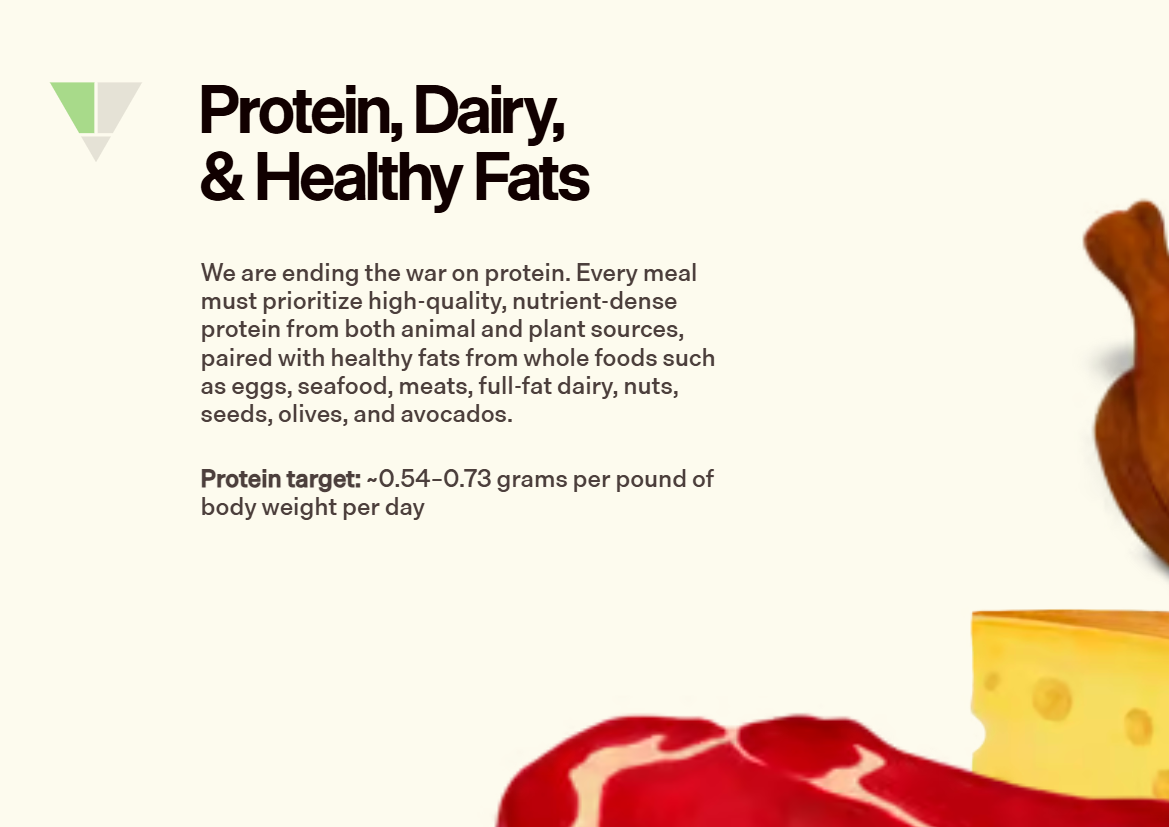
Kennedy's press conference statements drive this home. He criticized the old pyramid for sidelining proteins and healthy fats, which he says were wrongly minimized.[10] "Protein and healthy fats are essential and were underrepresented in previous guidelines," he noted, urging Americans to embrace red meat and whole milk as part of a balanced diet.[11] In fact, the new website says the government is ending the war on protein. Amen. This echoes my January 6 discussion of flawed recommendations, such as the vilification of dietary cholesterol in eggs, which a 2013 meta-analysis debunked, leading to the 2015 guidelines finally dropping restrictions on it. Yet, even then, the changes were incremental, bogged down by industry pressure. The new guidelines go further, explicitly calling out ultra-processed foods and added sugars as culprits in the chronic disease crisis, aligning with evidence from studies like those in Frontiers in Nutrition (2020), which I referenced, that warn of nutrient deficiencies in overly plant-based, low-animal-fat diets like EAT-Lancet.

The upside-down pyramid isn't just a visual gimmick—it's a call to action under the "Make America Healthy Again" banner. By promoting real foods and demoting junk, it empowers individuals to reclaim their health from corporate overlords. As Kennedy put it, the guidelines aim to "name and shame highly processed foods," encouraging diets that support gut health and reduce inflammation.[12] This resonates with my earlier emphasis on personal research and humility: "Doing our research... empowers us to make better health decisions." Skeptics who questioned the old dogma, often labeled as "fringe," are now vindicated. Low-carb and ketogenic approaches, which I mentioned as sidelined alternatives in my post, gain legitimacy here, backed by trials showing benefits for weight loss and insulin sensitivity.
The guidelines stress balance and personalization.[13], And the broader message is clear: We've been misled for too long. Big Food's processed empire and Big Pharma's pill-pushing have thrived on our ailments, with government complicity. RFK Jr.'s reset is a step toward accountability, urging us to question, research, and adapt—just as I advocated on January 6.
In conclusion, the upside-down food pyramid represents hope amid a health catastrophe engineered by neglect and greed. By citing the perils I've long highlighted and amplifying voices of skepticism, it paves the way for a healthier America. As Kennedy affirmed, "Eat real food"—words that could transform lives if we heed them. Let's embrace this change, hold the powerful accountable, and prioritize well-being over profits. For the scientific rationale for the new pyramid, click here. Next week, I will address how to frame hunger while eating real food and trying to lose weight.
Sources:
[1] White House Press Conference, January 7, 2026.
[2] U.S. Dietary Guidelines for Americans, 2025-2030.
[3] RFK Jr. Statement, White House Press Conference, January 7, 2026.
[4] RFK Jr. Statement on Health Revolution, January 7, 2026.
[5] Brooke Rollins Statement, White House Press Conference, January 7, 2026.
[6] U.S. Dietary Guidelines Advisory Report, 2025.
[7] Author's Post: "The Fallacy of Dietary Guidelines: MyPlate and the Food Pyramid," January 6, 2026.
[8] CDC Obesity Statistics, 2026.
[9] USDA Lobbying Reports, Various Years.
[10] RFK Jr. Criticism of Old Pyramid, January 7, 2026.
[11] RFK Jr. on Proteins and Fats, January 7, 2026.
[12] RFK Jr. on Processed Foods, January 7, 2026.
[13] Expert Commentary on New Guidelines, Various Sources, 2026.