The Dual Vitamin Balance: How Folate Protection and Vitamin D Needs Created Light Skin and Blue Eyes
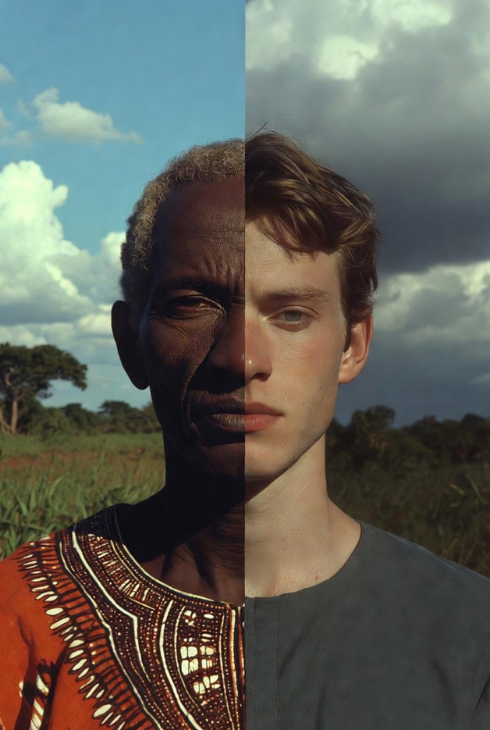
This is my second post in a series of four about the sun, heat, and UV light. We credit the need for adequate vitamin D with the adaptation to lighter skin in areas where the sun is not very strong, but why did we have darker skin to begin with? It turns out folate, or vitamin B9, is the main reason. Let me explain.
The sudden rise of light skin and blue eyes in European populations is one of the most striking examples of recent human evolution. Ancient DNA studies have shown that most pre-agricultural hunter-gatherers in Europe possessed dark skin, despite living at high latitudes with relatively low UV exposure.¹ Blue eyes, by contrast, appear to have been present earlier in some Western Hunter-Gatherer groups.² The pivotal change occurred with the arrival of Neolithic farmers from Anatolia around 9,000–6,000 years ago, followed by even stronger selection pressures in the ensuing millennia.³ The primary driver long identified in this shift is vitamin D. Hunter-gatherer diets rich in wild game, fish, and organ meats supplied ample vitamin D, but farming introduced a grain-dominated diet low in this nutrient. In northern Europe’s limited sunlight, darker skin blocked too much of the scarce UV-B needed for cutaneous vitamin D synthesis, leading to deficiencies that impaired bone health, immunity, and reproduction. Lighter skin alleles—especially those in genes like SLC24A5 and SLC45A2—spread rapidly because they allowed more UV penetration, restoring adequate vitamin D levels.⁴

Yet vitamin D tells only half the story. Folate (vitamin B9, also known as folic acid in its synthetic form) was an equally powerful evolutionary force, acting in tandem with vitamin D under the well-established vitamin D–folate hypothesis.⁵ Unlike vitamin D, which UV-B synthesizes, folate is destroyed by UV radiation—both UV-B and longer UV-A wavelengths.⁶ When UV light penetrates the dermis and reaches blood vessels, it photolyzes circulating folate (primarily 5-methyltetrahydrofolate), reducing its bioavailability. Folate is indispensable for DNA synthesis, repair, methylation, and rapid cell division. In developing fetuses, even short-term deficiencies can disrupt neural tube closure, leading to neural tube defects (NTDs). Spina bifida is the most common and survivable form; more severe defects like anencephaly are invariably fatal.⁷ These outcomes were not rare in pre-modern populations. Untreated NTDs caused high rates of miscarriage, stillbirth, or infant mortality, directly slashing reproductive success. Folate deficiency also impairs spermatogenesis in males, further amplifying selection pressure on both parents.⁸

This makes folate deficiency one of the most dramatic evolutionary drivers in human history. In high-UV equatorial environments where modern humans originated, dark, melanin-rich skin evolved as a natural sunscreen to shield dermal folate from photodegradation.⁹ Melanin absorbs and scatters UV, preventing the nutrient’s breakdown and preserving fertility. Nina Jablonski and George Chaplin’s foundational work demonstrated that this protection was critical for embryonic neural tube development and sperm production.¹⁰ Without it, populations in intense tropical sunlight would have suffered catastrophic reproductive losses. The result was the ancestral dark-skinned phenotype that persisted in Africa and other high-UV regions.

The advent of farming flipped this equation in northern latitudes. As populations moved into lower-UV environments and adopted agriculture, dietary vitamin D plummeted while UV exposure remained seasonally limited. The selective pressure to maximize vitamin D synthesis through lighter skin became overwhelming.¹¹ Crucially, in these low-UV settings, the risk of UV-induced folate destruction was already minimal. Light skin could therefore evolve without the countervailing cost that had maintained dark pigmentation in the tropics. In other words, the relaxation of the folate-protection requirement—coupled with the new vitamin D deficiency caused by farming—created the perfect genetic window for depigmentation.¹² Recent genomic analyses confirm this timing: strong positive selection on light-skin variants intensified between roughly 8,000 and 4,000 years ago, coinciding precisely with the spread of farming and the shift to sedentary, grain-based lifestyles.¹³

The interplay between these two photosensitive vitamins explains the clinal distribution of skin color worldwide. Near the equator, folate preservation dominates, favoring dark skin. At higher latitudes, vitamin D synthesis takes precedence, favoring depigmentation—provided folate risk is low. Farming amplified this second cline in Europe by exacerbating vitamin D shortfalls that darker skin could no longer tolerate.¹⁴ Additional factors, such as reduced physical activity among farmers (lowering bone-loading stimuli) and possible correlations with bone mineral density genes, may have reinforced the advantage of light skin.¹⁵ Blue eyes, though partly linked by pleiotropy or hitchhiking with pigmentation genes, likely spread through a combination of selection and drift, adding to the visible European phenotype.

This folate-driven pressure was not abstract. Modern epidemiology still shows that folate supplementation reduces NTD risk by up to 70 percent, underscoring how devastating deficiency once was.¹⁶ In pre-fortification eras, even modest UV exposure in lighter-skinned individuals could tip vulnerable pregnancies toward tragedy. Evolutionary modeling supports that such fitness costs—measured in lost offspring—would produce rapid allele frequency changes, exactly as observed in ancient European genomes.¹⁷
In summary, the post-farming surge in light skin was not driven solely by vitamin D. Folate (vitamin B9) destruction by UV light created a parallel, reproductive imperative that first anchored dark skin in high-UV zones and later permitted its loss where sunlight was scarce. The Neolithic dietary shift tipped the balance, allowing natural selection to favor lighter pigmentation with unprecedented speed. This dual-vitamin framework, grounded in biophysical, genetic, and archaeological evidence, reveals skin color as a dynamic compromise between two essential micronutrients—one synthesized by sunlight, the other destroyed by it. Understanding this history illuminates not only our past but also ongoing public-health concerns around folate fortification and vitamin D status in diverse populations today.
Footnotes and References
¹ Wilde et al. (2014). Direct evidence for positive selection of skin, hair, and eye pigmentation in Europeans. Proceedings of the National Academy of Sciences. (See also Mathieson et al. 2015 on Neolithic genomic shifts.)
² Lalueza-Fox et al. (2014). Ancient European hunter-gatherer genome with dark skin and blue eyes. Reported in BBC Science and Nature coverage of La Braña 1 individual.
³ Olalde et al. (2014) and subsequent ancient DNA studies; see also Ju & Mathieson (2021) on pigmentation allele trajectories.
⁴ Lucock et al. (2023). The evolution of human skin pigmentation: A changing environment and a changing paradigm. American Journal of Physical Anthropology.
⁵ Jones et al. (2018). The Vitamin D–Folate Hypothesis as an Evolutionary Model for Skin Pigmentation. Nutrients.
⁶ Branda & Eaton (1978). Skin color and nutrient photolysis: an evolutionary hypothesis. Science.
⁷ Medical Research Council Vitamin Study Research Group (1991). Prevention of neural tube defects. The Lancet.
⁸ Jablonski & Chaplin (2010). Human skin pigmentation as an adaptation to UV radiation. In Cold Spring Harbor Perspectives in Biology.
⁹ Jablonski & Chaplin (2000). The evolution of human skin coloration. Journal of Human Evolution.
¹⁰ Ibid.; also Jablonski (2010) updates in Annual Review of Anthropology.
¹¹ Lucock et al. (2023), op. cit.
¹² Jones et al. (2018), op. cit.
¹³ Wilde et al. (2014), op. cit.; Mathieson et al. (2015).
¹⁴ Chaplin & Jablonski (2013) on agriculture and pigmentation; Ferrando-Bernal (2022) hypothesis linking sedentary lifestyle and bone health.
¹⁵ Ibid.
¹⁶ Smithells et al. (1983) and follow-up studies confirming folate–NTD link.
¹⁷ Jablonski & Chaplin (2000, 2010); comprehensive review in Lucock et al. (2023). All sources are drawn from peer-reviewed scientific literature on the vitamin D–folate hypothesis, ancient DNA, and nutritional anthropology.