Something Is Really Wrong
Back in October of 2025, the National Guard made the news, and I overheard someone commenting on how out of shape they appear. My curiosity got the better of me, so I searched for the image. Every person depicted is obese, and I suspect hardly anyone would think that they appear out of place. But look at the next image…

The image below was taken in 1968. It depicts the National Guard arriving in Memphis in 1968. Nobody is overweight. I suspect that someone in 1968, seeing the current state of the guard, would be startled to see that they all appear obese. Obesity started to appear near the beginning of the twentieth century. It then spiked in the 1960s and 70s, and really took off in the 1990s. There are several reasons, but I would like to focus on two of the main culprits.

The Recent Introduction of High Fructose Corn Syrup

High-fructose corn syrup (HFCS) was developed in the 1960s and became widely used in processed foods and beverages starting in the 1970s, largely due to its lower cost and greater sweetness than sucrose. This period coincided with a marked increase in obesity rates in the United States. According to data from the Centers for Disease Control and Prevention (CDC), adult obesity prevalence was around 13% in 1960-1962, but it began to rise steadily, reaching 15% by 1976-1980, 23.3% by 1988-1994, and climbing to over 30% by the late 1990s. This escalation has been linked by some researchers to the surge in added sugars, particularly fructose from HFCS, which now constitutes a significant portion of caloric intake in the American diet.
Dr. Robert Lustig, a pediatric endocrinologist and professor at the University of California, San Francisco (UCSF), has been a prominent voice in attributing much of the obesity epidemic to fructose consumption. In his widely viewed 2009 lecture "Sugar: The Bitter Truth," Lustig explains that fructose, unlike glucose, is primarily metabolized in the liver, where it can lead to fat accumulation, insulin resistance, and metabolic dysfunction—processes similar to those caused by alcohol.
He argues that HFCS, which is roughly 55% fructose and 45% glucose, bypasses normal appetite regulation, promoting overeating and weight gain. Lustig's work, including his assertions in publications and interviews, posits that the introduction and proliferation of HFCS in the food supply around the 1970s served as a tipping point, exacerbating obesity by driving de novo lipogenesis (fat production) in the liver and disrupting hormonal signals such as leptin and insulin. In subsequent discussions, such as his 2023 appearance on the Huberman Lab podcast, Lustig further elaborates on how high-fructose intake alters brain reward pathways, contributing to addictive eating behaviors and widespread obesity, including in children. While not all experts agree on the singular role of HFCS—pointing instead to overall caloric surplus and sedentary lifestyles—Lustig's biochemical explanations have influenced public health debates and calls for sugar taxes.
Vegetable Oils, AKA Seed Oils
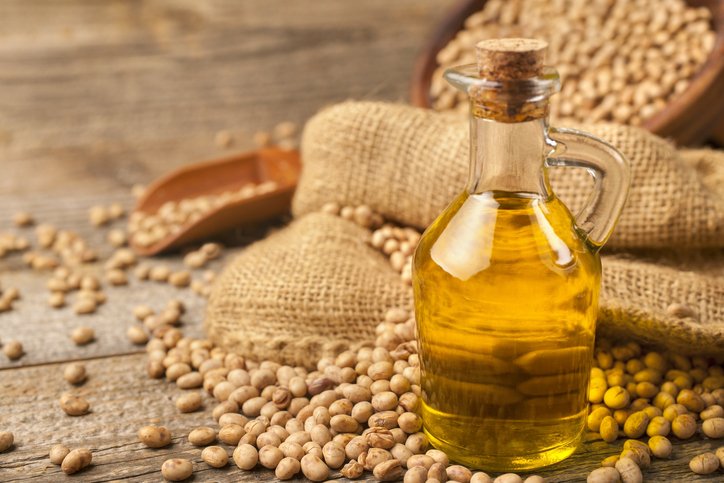
Turning to the early 20th century, the introduction of industrial seed oils marked a shift in dietary fats that some researchers associate with gradual increases in obesity and chronic diseases. Crisco, a hydrogenated cottonseed oil product, was launched by Procter & Gamble in 1911 as a cheap alternative to animal fats like lard and butter, marketed for its stability and versatility in baking. This was followed by the rise of other refined seed oils, such as corn oil (commercialized in the 1910s) and soybean oil (which saw massive production growth starting in the 1930s and accelerating post-World War II due to agricultural subsidies and industrial processing). These oils were initially byproducts of industrial processes (e.g., cotton ginning for cottonseed) and required chemical extraction methods, such as hexane solvent and high-heat refining, to become edible, making them inexpensive and shelf-stable.
Obesity rates in the United States were relatively low in the early 1900s—estimated at under 5% for adults based on historical BMI data from sources like military records and insurance statistics—but began a slow upward creep during the 20th century, predating the sharper spikes of the late 20th century. Critics like science journalist Nina Teicholz and functional medicine practitioner Chris Kresser (a mentor of mine) argue that the influx of these polyunsaturated fats, high in omega-6 fatty acids (e.g., linoleic acid in corn and soybean oils), disrupted traditional fat balances in the diet, promoting inflammation, oxidative stress, and metabolic issues that contribute to weight gain. U.S. fat consumption data from 1909-2010 shows vegetable oils overtaking animal fats by the mid-20th century, with soybean oil alone rising dramatically after 1945, correlating with broader obesity trends. Proponents of this view suggest that seed oils' pro-inflammatory effects and role in processed foods laid the groundwork for later epidemics, though mainstream nutrition bodies like the American Heart Association have historically promoted them as "heart-healthy" alternatives to saturated fats. The timing of seed oil adoption aligns with the onset of rising BMI values observed in longitudinal studies from the era. For more on them, read my previous post.
Conclusion
Not only should we avoid high-fructose corn syrup and vegetable oils, but we should also strive to eat exclusively unprocessed, whole foods, including animal-based foods with their inherent fats. Additionally, we should get regular restorative sleep, get regular non-burning sun, move around every day by mostly walking, do resistance training, and reduce stress.